
AI coding tools are entering a new phase. After rapid growth driven by speed and ease, companies are now slowing down.
Enterprises want control, not just fast code. Industry leaders say 2026 will mark a clear shift toward governance, quality, and structure in AI-driven development.
From Fast Code To Strong Architecture
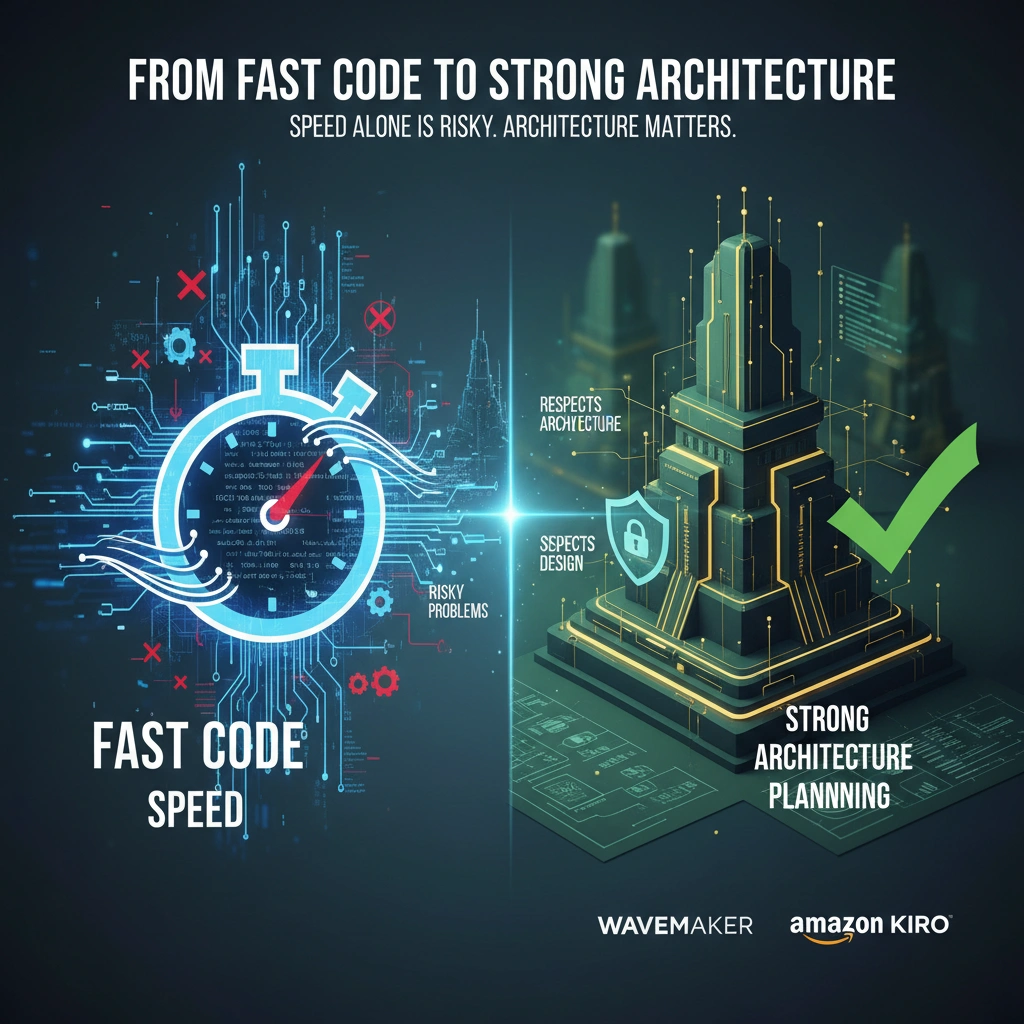
In the early wave, AI coding tools focused on speed. Developers could generate code in seconds. Startups grew fast. Some became unicorns within months. But problems followed.
Leaders now warn that speed alone is risky.
Low-code platform WaveMaker says AI must respect architecture. Just AI is not enough anymore. Companies want systems that fit existing designs.
Amazon’s Kiro team supports this view. They promote spec-driven development.
Key changes in approach include:
- Focus on clear requirements before writing code
- Treat specifications as testable software assets
- Use version control for design documents
- Reduce errors caused by unclear inputs
Kiro, launched in August 2025, blocks code generation until planning is done. This helps avoid large mistakes. As Amazon notes, AI can repeat bad requirements very fast. That creates serious issues later.
Also read about: Vibe Coding: Cognizant Unleashes AI Innovation
Why Enterprises Are Saying No To “Vibe Coding”
Large organizations are becoming cautious. Many run on systems built over years. Random code breaks these layers.
CIOs now demand trust and visibility.
Enterprise concerns include:
- Rising technical debt
- Security gaps
- Inconsistent code across teams
- Lack of audit trails
- Compliance risks
Data supports these fears. GitClear reviewed 211 million lines of code. It found duplicated code increased eight times between 2022 and 2024. AI-generated code caused much of this growth.
A 2025 software report also shows developers now spend more time fixing AI code than saving time with it.
Economic pressure adds to the shift. AI coding tools depend on costly language models. Margins are shrinking. Big players now launch similar tools, reducing differentiation.
As features become the same, governance becomes the advantage.
Companies now want AI that understands their systems. They want consistency, safety, and long-term value. Speed still matters. But control matters more.
What This Means Going Forward
AI coding is not slowing down. It is growing up. The future favors tools that combine automation with structure.
Governance will define winners.
More News To Read: