
The global e-learning market is projected to reach $400 billion by 2026, fueled by 73.8 million online learners worldwide representing a staggering 900 percent increase since 2000.
Mobile-first platforms are emerging as the primary delivery mechanism, with research showing that mobile users complete lessons 45 percent faster than those using desktop platforms.
This explosive growth is being amplified by AI-driven personalization, micro-credentials, and hybrid learning models.
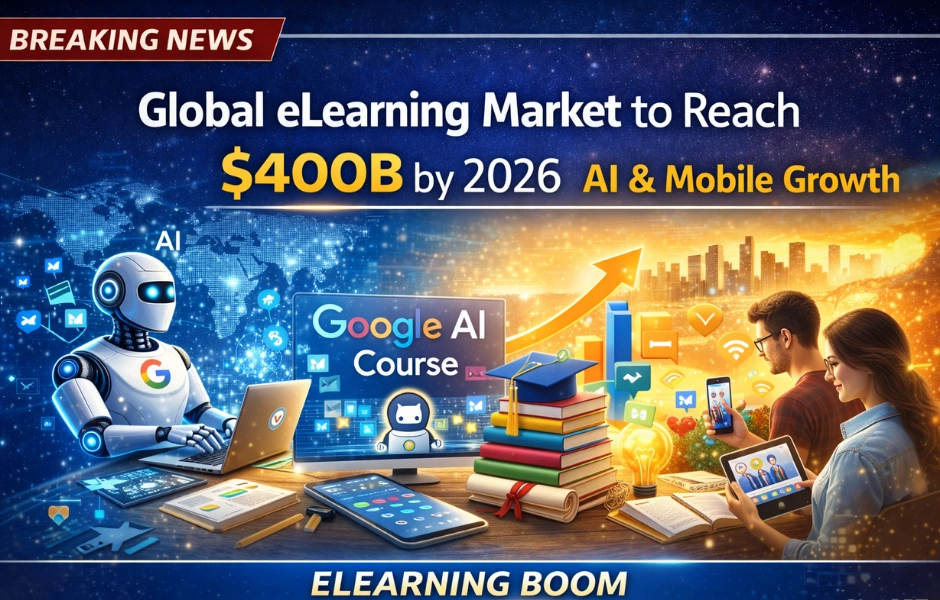
Global eLearning Market: AI Personalization Transforms Learning Outcomes
AI-driven personalization enables students to receive tailored learning paths tailored to their preferences, learning styles, and growth areas.
Pearson, a leading education publisher, recently reported a six percent increase in higher education revenues after embedding AI tools into its digital learning platforms.
Platforms like iSpring have added AI assistants that suggest course ideas, write content, and improve course design.
Studies show that 84 percent of learners prefer online learning for the ability to learn at their own pace, and 81 percent report that online learning helps improve their grades.
Also read about: eLearning Statistics 2026
Micro-Credentials and the Stackable Degree Revolution
Hybrid programs and micro-credentials are becoming increasingly common, with many universities now offering short, stackable credentials that can be applied toward full degrees.
This model addresses the needs of adult learners aged 25 to 54 who cite the ability to balance studies with work and family as their primary reason for choosing online formats.
Retention rates for online learners can reach up to 60 percent, compared to 8 to 10 percent in traditional face-to-face classrooms, with students reporting 40 to 60 percent time savings.
However, 18 to 24 percent of learners still express concerns about academic quality and staying motivated.
More News To Read: