
The Most Important Question in Technology Investment Right Now
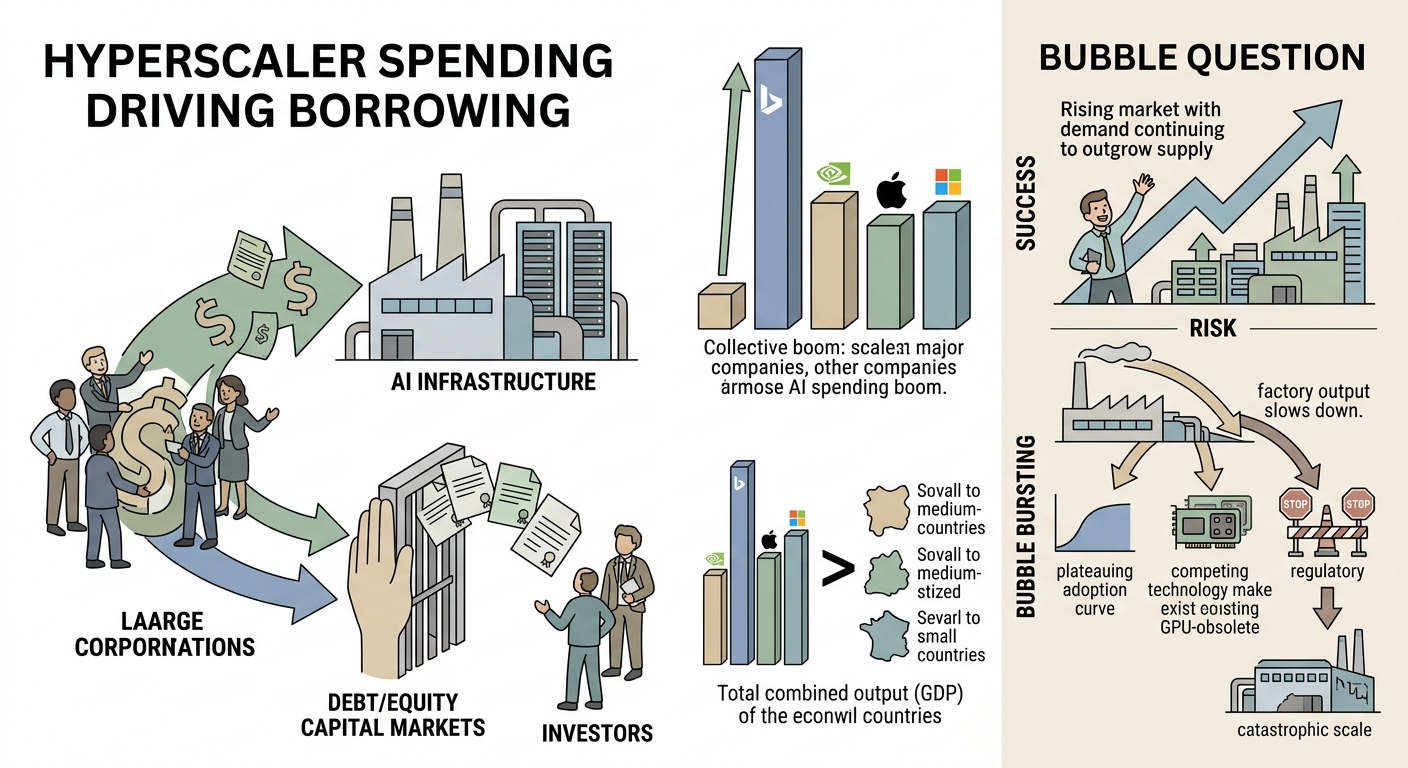
The AI spending boom is driving corporate borrowing. Hyperscalers — the major cloud and AI infrastructure players — are expected to invest more than $650 billion in AI infrastructure this year. This influx of debt and equity into capital markets has so far been easily absorbed by investors, though concerns are growing about a possible AI spending bubble.
Alphabet spending $180 to $190 billion on capital expenditure in 2026 is not an incremental increase. It is nearly double what the company spent the previous year. Microsoft, Amazon, Meta, and Oracle are all making similar proportional increases simultaneously.
The combined AI infrastructure spend of the major hyperscalers in 2026 exceeds the GDP of many mid-sized economies.
The bubble question is legitimate and deserves honest engagement rather than dismissal. The AI companies are spending this capital on the belief that demand for AI compute will continue growing faster than supply can be built.
If that belief is correct, they will have underinvested. If the belief is wrong — if AI adoption plateaus, if a competing architecture makes current GPU infrastructure less relevant, or if regulatory restrictions limit deployment — they will have overbuilt at catastrophic scale.
What Startup Founders Should Conclude
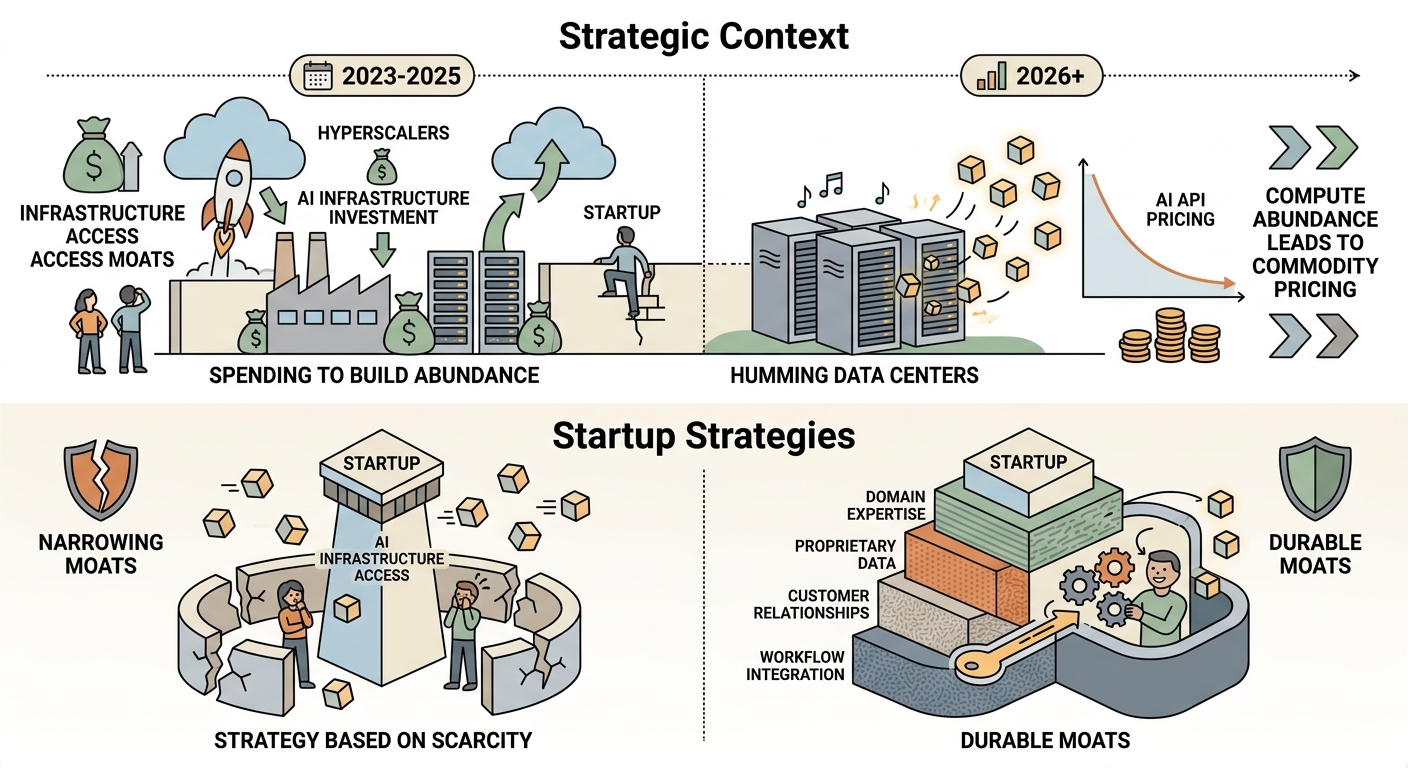
For startup founders, the AI infrastructure investment wave creates a specific strategic context. The hyperscalers are spending to ensure that AI compute is abundant and available. As their data centres come online over 2026 and 2027, AI API pricing is likely to decline further — the economics of abundant infrastructure push toward commodity pricing for compute.
Startups that have built moats around AI infrastructure access will find those moats narrowing as compute becomes more abundant. The durable moats in 2026 and beyond are domain expertise, proprietary data, customer relationships, and workflow integration — things that abundant compute cannot replicate.
The startups building on the assumption that AI capabilities will remain scarce and expensive are building on a foundation that Alphabet’s $80 billion raise directly undermines.
The Opportunity Inside the Infrastructure Wave
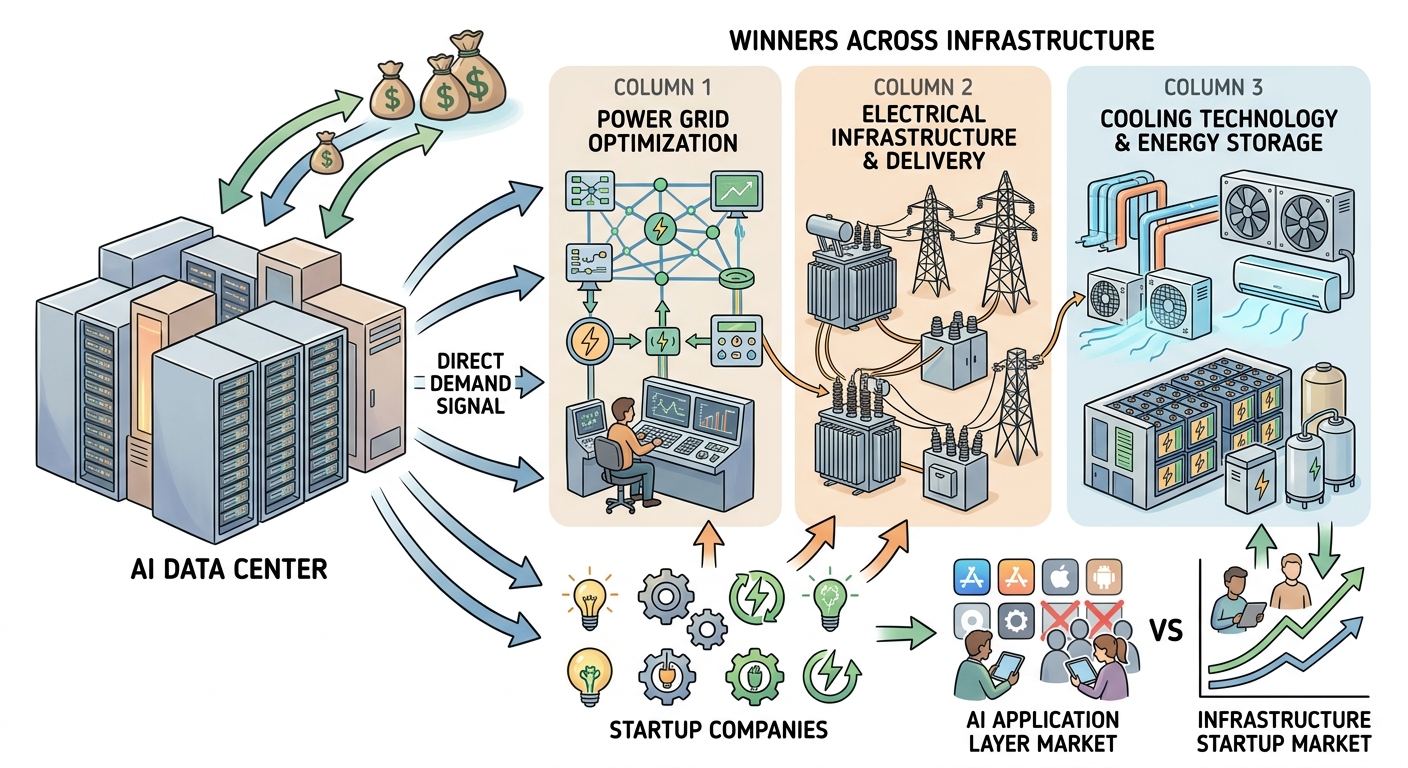
The AI boom is creating new winners across energy storage and electrical infrastructure. The relationship between AI data centres and energy infrastructure is becoming one of the defining investment themes of the decade.
For startups in energy management, power grid optimisation, cooling technology, and electrical infrastructure, the $700 billion in AI capex is a direct demand signal. Every data centre being built needs cooling, power delivery, grid management, and energy storage.
The startup market serving these infrastructure needs is significantly less competitive than the AI application layer while being directly funded by the same capital wave.
💬 Reddit — r/startups and r/investing on AI infrastructure bubble risk: 🔗https://www.reddit.com/r/investing/search/?q=AI+infrastructure+bubble+Alphabet+$190+billion+2026
🐦 X/Twitter — investors and founders debating AI infrastructure bubble thesis: 🔗https://x.com/search?q=AI+infrastructure+bubble+hyperscaler+spending+2026&f=live
💬 Quora — is the AI infrastructure investment a bubble in 2026: 🔗https://www.quora.com/search?q=AI+infrastructure+investment+bubble+2026
Quick Links: