
In 2026, misinformation and fake news continue to shape how people consume information online. Fake news now spreads faster and more widely than ever before, fueled by social media algorithms and powerful AI tools.
But knowing the latest fake news statistics gives you the advantage you need to spot false claims, check facts effectively, and protect your reputation both online and in real life.
According to recent global data, a large share of internet content is unreliable, and billions of people encounter misinformation regularly.
These fake news statistics help explain the scale of the problem, where it comes from, who is most affected, and how you can safeguard yourself against it.
Quick Overview: Top Fake News Statistics for 2026
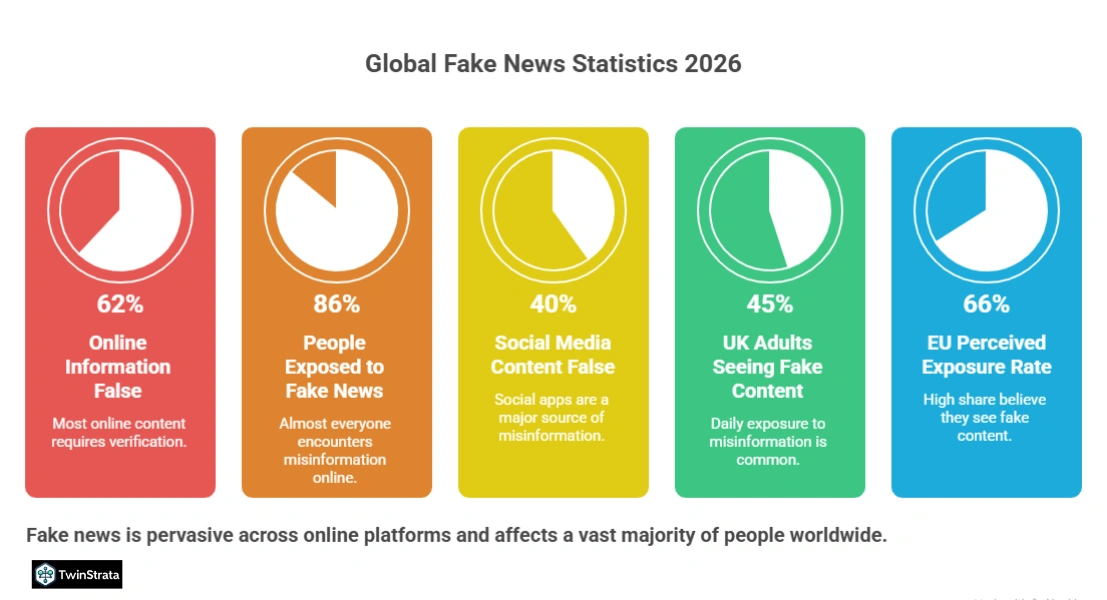
Understanding the scale of fake news today helps you navigate the online world confidently. Below is a summary of the most important global fake news statistics:
| Statistic | Latest Finding (2026) | Why This Matters to You |
|---|---|---|
| % of Online Information False | ~62% of online content may be false. | Most information found online should be verified before trusting it. |
| % of People Exposed to Fake News | 86% of people worldwide have encountered misinformation online. | Fake news is not rare — almost everyone sees it. |
| % of Social Media Content False | ~40% of content shared on social platforms is fake. | Social apps are one of the biggest sources of misinformation. |
| % of UK Adults Seeing Fake Content | ~45% of adults in the UK see fake news daily. | Daily exposure to misinformation is common in many countries. |
| EU Perceived Exposure Rate | ~66% of Europeans think they encounter fake news often. | A high share of people believe they see fake or misleading content. |
Sources: recent fake news reports and surveys published in 2026.
These figures show that fake news is not just a local issue – it affects people around the world and shapes global perceptions of media and truth.
Also read about: Top 10 Unbiased News Sources In 2026
Why So Much Fake News In 2026?
A key reason misinformation persists is its ease of production and distribution. With billions of active social media users and sophisticated AI tools, false information spreads faster and appears more believable than ever.
Experts highlight that AI-generated content, including synthetic images and videos, contributes to the rising trend of misinformation. This makes distinguishing real from fake far more difficult for average users.
In Europe, recent surveys show that many people feel they are often or very often exposed to fake or misleading content — sometimes up to 36% reporting this regularly, with overall perceived exposure around 66%. Confidence in recognizing fake information fell slightly compared with previous years.
How Fake News Shows Up Online
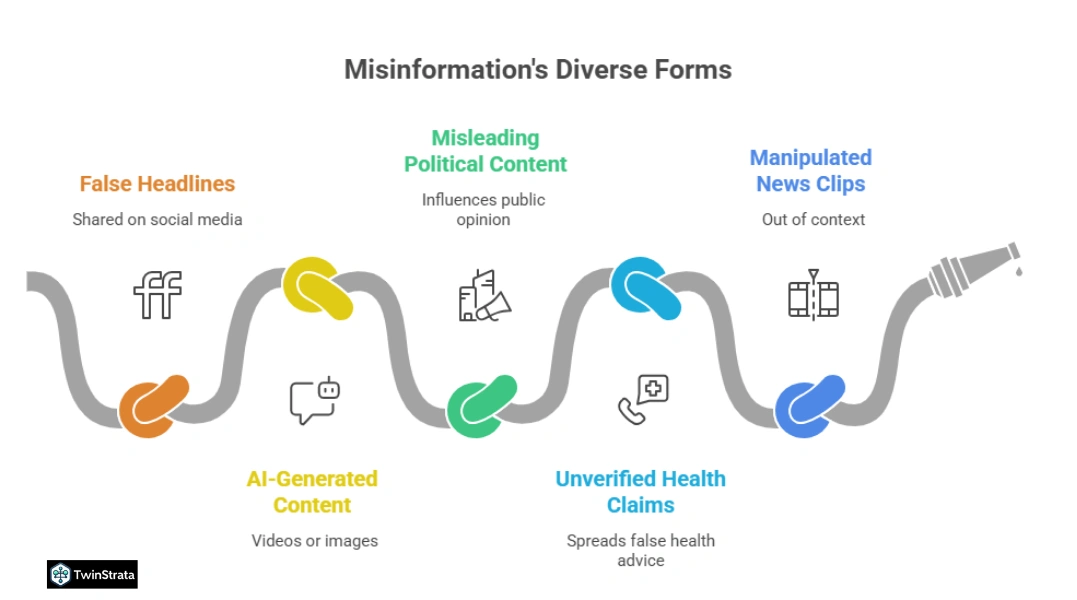
Misinformation doesn’t look the same everywhere. It can appear as:
- False headlines shared on social media
- AI‑generated videos or images
- Misleading political content
- Unverified health claims
- Manipulated or out‑of‑context news clips
In fact, major platforms have seen millions of views of misleading or fabricated content, especially around breaking news events. For example, AI‑generated visuals linked to international political stories spread widely before being fact‑checked and removed.
Social Media and Fake News: The Core Connection
Social media platforms remain the central engine of fake news spread. A large share of misinformation originates from user posts, viral shares, bot accounts, and AI‑generated content.
Latest global statistics show:
- ~40% of all content shared on social media could be false
- Many users believe they frequently see misleading posts in their feeds.
This means you should treat social media content with caution and verify claims, even those that look credible at first glance.
How People Perceive Fake News in 2026
Recent surveys reveal interesting trends in how people view fake information:
- A large majority globally recognizes that misinformation is widespread.
- In European countries, many people report encountering disinformation often or very often.
- Confidence in identifying fake content is not always strong – only about 62% feel somewhat or very confident in spotting disinformation.
These perceptions show an ongoing struggle between exposure and understanding — many see fake news, but fewer people feel confident they can correctly identify it.
Real Risks: Beyond Annoying Headlines
Fake news is more than just annoying misinformation. It carries real consequences:
- It can influence public opinion and political decisions.
- It can damage trust in institutions and media.
- It can affect personal choices about health, finance, and safety.
Experts warn that misinformation may affect elections and other national events, especially when AI tools rapidly generate impactful fake content.
In the 2026 Bangladeshi general election, AI‑generated disinformation was detected across tens of thousands of accounts, affecting public discourse on candidates and outcomes.
This example shows how coordinated fake news campaigns can influence democratic processes — and why vigilance is critical.
Tables: Where Fake News Appears Most Often
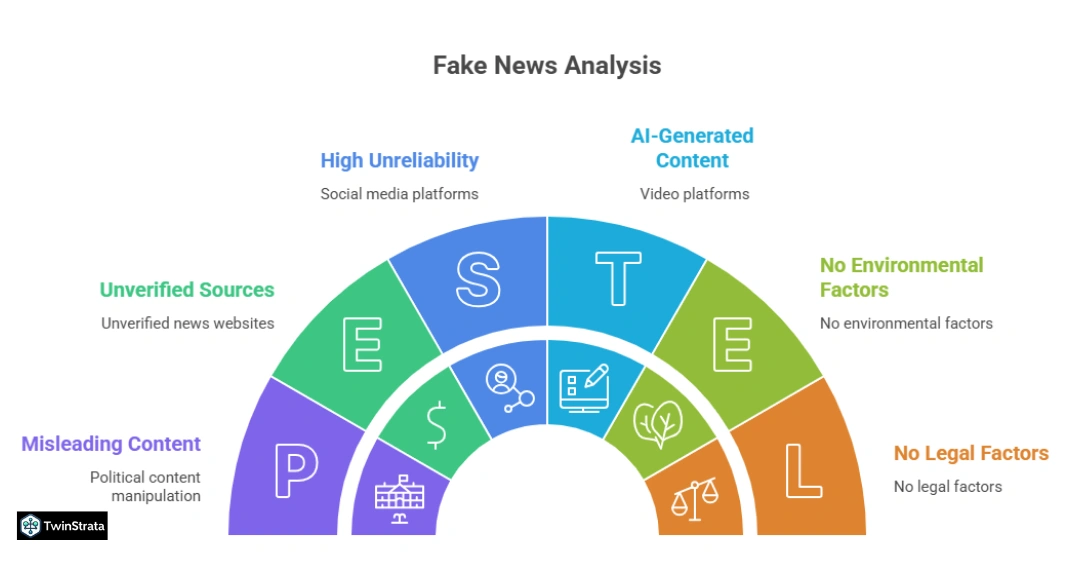
Here’s a simple table to help you see the difference in reliability across common sources:
Unreliable Online Sources vs. What You Can Do
| Platform / Source | Unreliable Content Rate | Action You Can Take |
|---|---|---|
| Social Media Platforms | High (~40%) | Check claims with trusted fact‑checking sites |
| Online Blogs & Forums | Moderate to high | Cross‑verify with official news outlets |
| Video Platforms | Moderate | Look for warning labels or related verified content |
| News Websites (unverified) | Lower (~30%) | Confirm via reputable mainstream sources |
Use this table as a quick guide to weigh how much you trust what you see online.
How You Can Spot Fake News in 2026
Knowing the scale of fake news is half the battle. Here’s how to protect yourself:
Practical Checklist
- Verify with multiple sources before believing or sharing.
- Use fact‑checking tools like Snopes, FactCheck.org, or NewsGuard.
- Check website credibility — unknown sites are more likely to spread falsehoods.
- Look for visual distortions — AI images or videos can be deepfakes.
- Beware of sensational headlines — emotion‑driven stories often indicate fake content.
Small daily habits like these keep you informed and help you make better decisions in life and work.
Fake News and Global Trust in Media
Trust in information sources continues to shift. While some countries maintain high faith in news media, others show low levels of trust, especially amid rising misinformation.
This global distrust fuels the spread of fake news because people turn to social networks or unverified outlets for information — sometimes exactly where fake stories proliferate.
Why Fighting Fake News Still Matters in 2026
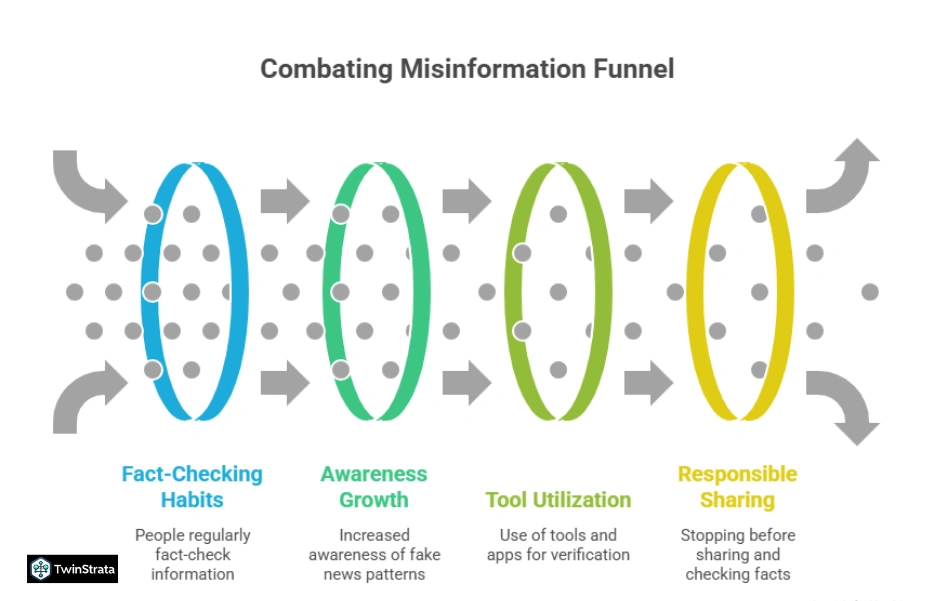
Although misinformation is widespread, there’s good news:
- Many people now fact‑check information regularly.
- Awareness about fake news patterns is growing.
- Tools and apps make it easier to verify claims on the spot.
By committing to better habits — like stopping before sharing and checking facts — you not only protect yourself, but also help slow the spread of misinformation across your network.
FAQs About Fake News Statistics
1. What percentage of online content is fake in 2026?
As of 2026, approximately 62% of online content is false, according to the Central Statistics Office. This means that a large portion of the information we encounter online is unreliable and requires careful verification.
2. How can I spot fake news on social media?
To spot fake news on social media, you should:
- Be cautious with sensational headlines and always verify with other sources before sharing.
- Check for verified accounts.
- Cross-check stories with trusted sources like Reuters or the Associated Press.
3. Why is AI contributing to the spread of fake news?
AI plays a significant role in creating and spreading fake news through deepfake videos and synthetically generated images. As of 2026, 93% of social media videos are AI-generated, making it harder to distinguish truth from fabrication.
4. What countries experience the most fake news exposure?
Globally, about 86% of people have encountered fake news. Countries like the United States, United Kingdom, and India have high exposure rates due to the massive use of social media platforms and the rapid spread of misinformation.
Also Read:
- DuckDuckGo Statistics
- Referral Marketing Statistics
- Disney Plus Statistics
- Digital PR Statistics
- Cyber Monday Statistics
Final Thoughts
Fake news statistics in 2026 show that misinformation is a global issue with real consequences. But knowledge is power. When you understand:
- how widely fake news spreads,
- where it appears most,
- and how to spot it,
…you gain a major edge in making better choices about your information diet. Take time to verify, check facts, and encourage others to do the same. In a world where falsehood spreads quickly, you can choose to spread truth.