
A new model has taken over the marketing funnel. It is called the agentic proxy model. An AI agent now sits between brands and consumers.
It researches, compares, and decides — often without the user ever visiting a website.
This changes everything about how brands must show up online.
Agentic Proxy Model: How the Agentic Proxy Model Works
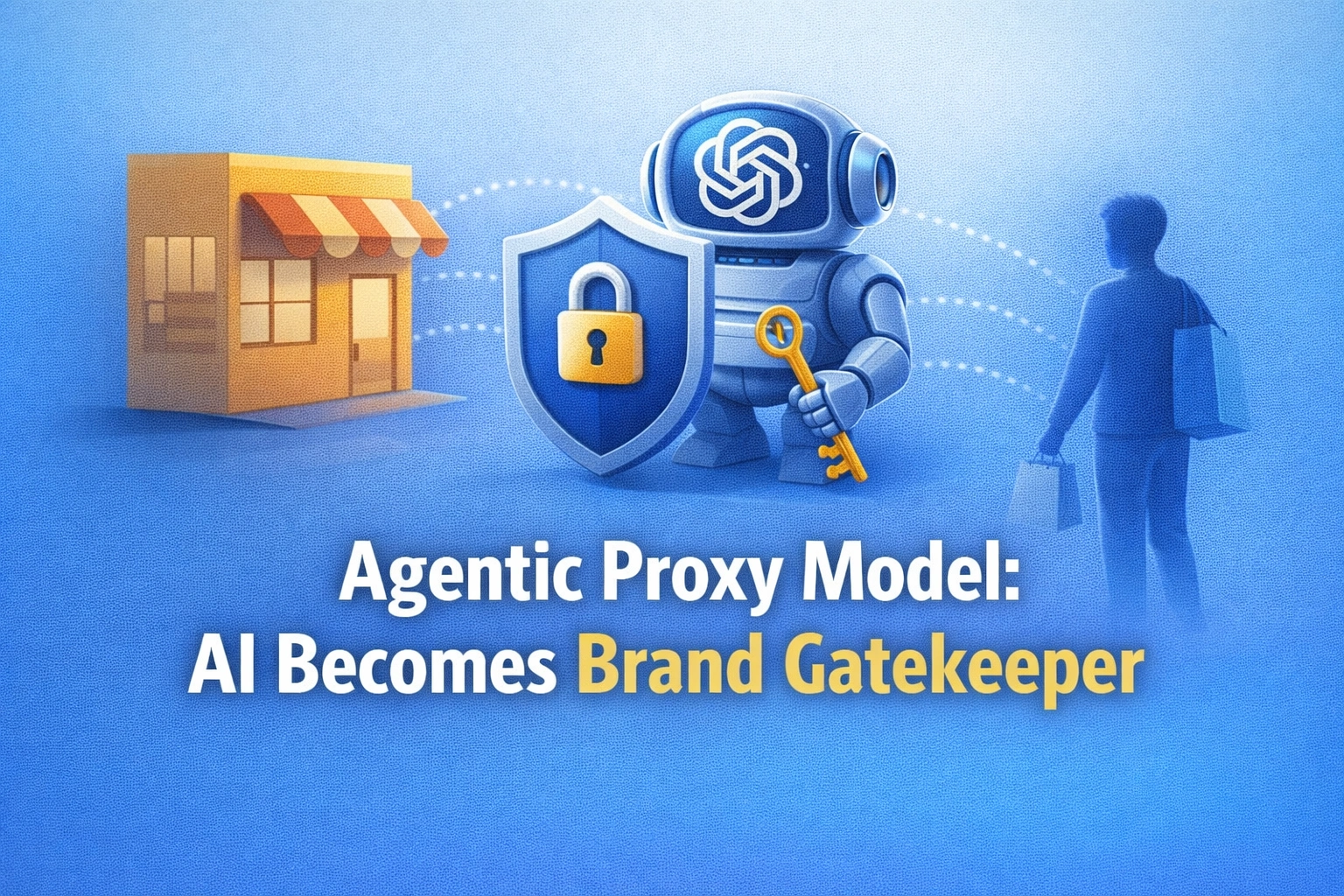
Until recently, a consumer would search Google, visit several websites, compare products, and then make a decision. That journey is disappearing. In the agentic proxy model, an AI agent does all of that work on behalf of the user.
The user says “find me the best running shoe under £100 with free delivery.” The AI searches, compares, reads reviews, checks delivery times, and presents one or two options.
The user never visits a product page. The AI made the recommendation. This is not a future scenario. OpenAI’s Agentic Commerce Protocol is open-sourced. Shopify merchants can enable AI checkout today.
New agent-to-agent frameworks allow AI systems to negotiate, book, and pay on behalf of users. Crystal Carter of Wix calls it a world where agents assemble everything a buyer needs in one response.
Options, trade-offs, reviews, and next steps — all delivered inside a chat. For brands, the terrifying reality is clear: if AI cannot find and trust your brand, you do not exist in this new layer of commerce.
Also read about: 5 Leading Residential Proxy Service Providers 👩🏻💻in 2026
What Brands Must Do to Win in an Agentic World
Winning in the agentic proxy model requires a completely different approach to your digital presence. First, your product and pricing data must be machine-readable.
AI agents pull structured data. If your prices, stock levels, and delivery options are not accessible via API or structured feeds, agents will ignore you. Second, your brand must have strong third-party credibility.
Agents prioritise trusted sources. Review sites, comparison platforms, and editorial mentions all count. An AI is 6.5 times more likely to recommend a brand through third-party sources than the brand’s own website.
Build your presence on platforms AI trusts. Third, your content must be decision-grade. Agents look for clear, specific, factual content that reduces ambiguity.
Vague marketing copy does not help AI make a recommendation. Pricing tables, case studies, and comparison guides all perform well.
The brands that win will be the ones that make it easy for AI to confidently recommend them. This is the new standard for digital marketing in 2026.
More News To Read: