
The proxy market has bifurcated in 2026. On one side: raw infrastructure providers competing on price and pool size. On the other: data acquisition platforms selling success rates and managed outcomes.
The rise of AI-native scraping is pushing the industry firmly toward the second model. According to multiple industry reports, AI-powered scraping delivers 30–40% faster extraction times and accuracy rates up to 99.5% on dynamic, JavaScript-heavy sites. r/datascience is full of threads comparing AI scraping APIs to traditional proxy-based approaches, and the conclusion increasingly favors hybrid strategies over pure proxy setups.
From Raw IP Rotation to Behavioral Mimicry: How the Proxy Landscape Shifted in 2026
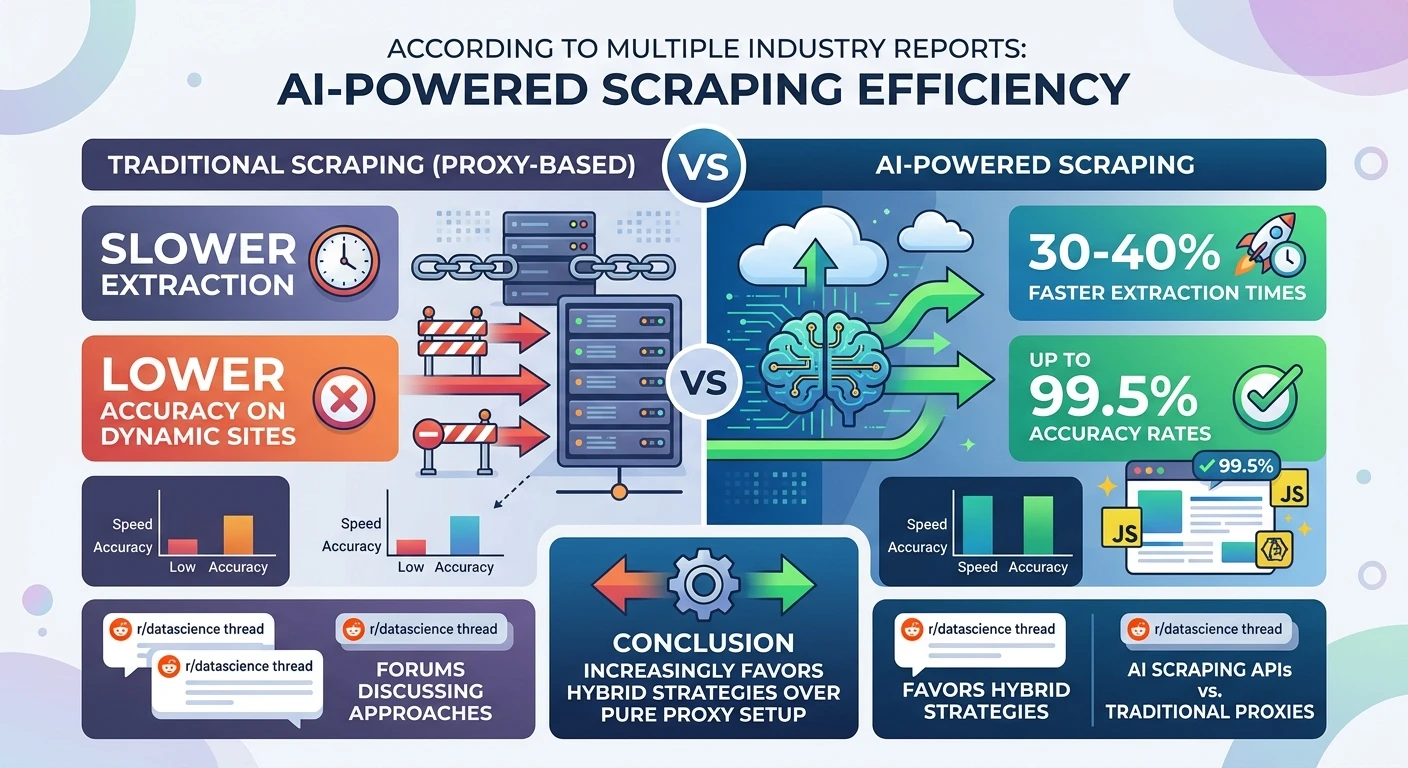
The practical difference is adaptation speed. Traditional proxy setups break when a target site changes its DOM structure — and the scraper must be manually updated. AI-native extraction tools identify what data looks like conceptually and adapt to layout changes automatically.
This matters enormously for scraping operations monitoring price data, product listings, or competitor content that changes frequently. The engineering overhead of maintaining traditional scrapers on high-change sites is now often more expensive than switching to managed AI extraction.
Where Residential and Mobile Proxies Still Dominate?
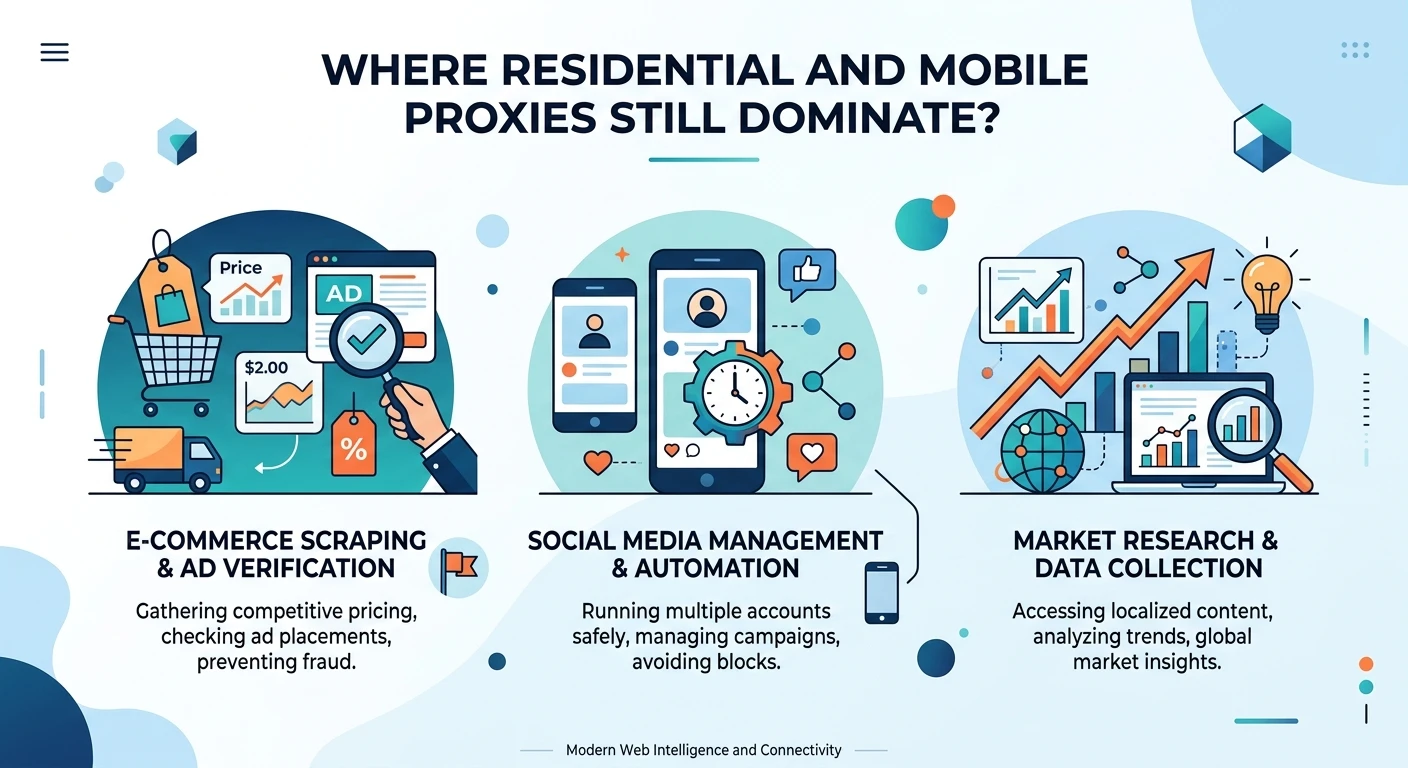
Despite the rise of AI-powered alternatives, residential and mobile proxies remain the most commonly cited tools for bypassing modern anti-bot defenses among scraping professionals.
For targets using behavioral AI to detect bots — analyzing mouse movement patterns, scroll behavior, and session timing — residential IPs from real devices remain the most effective cover for automated traffic. Mobile proxies specifically are becoming essential for targets that present different content or lower bot-detection thresholds to mobile devices.
The consensus forming on X among scraping engineers is a tiered approach: managed scraping APIs with AI parsing for structured data needs from major e-commerce and SERP sources, residential proxies for general medium-difficulty targets, mobile proxies for the most protected targets, and datacenter proxies for easy targets where speed and cost efficiency matter more than legitimacy.
Proxy providers building AI extraction capability on top of their proxy infrastructure — rather than positioning proxies and AI as separate products — are best positioned for where enterprise scraping spend is heading through 2026.
Also Read