
The State of Web Scraping Report 2026, produced jointly by Apify and The Web Scraping Club based on surveys of hundreds of web scraping professionals, delivers a data-first look at where the proxy industry stands heading into Q2.
The headline finding runs counter to what price trends alone would suggest: 65.8% of professionals used more proxies in 2025 than the year before, and 58.3% increased their proxy budgets — even as proxy prices have generally declined across all major categories.
Volume and Complexity — Not Price — Are Driving Proxy Spend in 2026

The explanation is structural: the volume and complexity of scraping operations are scaling faster than unit prices are falling.
Anti-bot systems have become significantly more aggressive — Cloudflare’s 2026 bot detection now requires full browser execution for JS challenges rather than simple token solving, and Turnstile CAPTCHAs now appear after as few as three to five requests from suspicious IPs.
This means more requests per successful data extraction, more proxy bandwidth consumed per dataset, and higher effective cost even as per-GB rates drop.
Multi-Provider Strategy and Residential Dominance in Current Operations

One of the most actionable findings from the 2026 scraping report is the rise of the multi-provider proxy strategy.
43.1% of respondents now use two to three proxy providers simultaneously, and 12.1% use four to five.
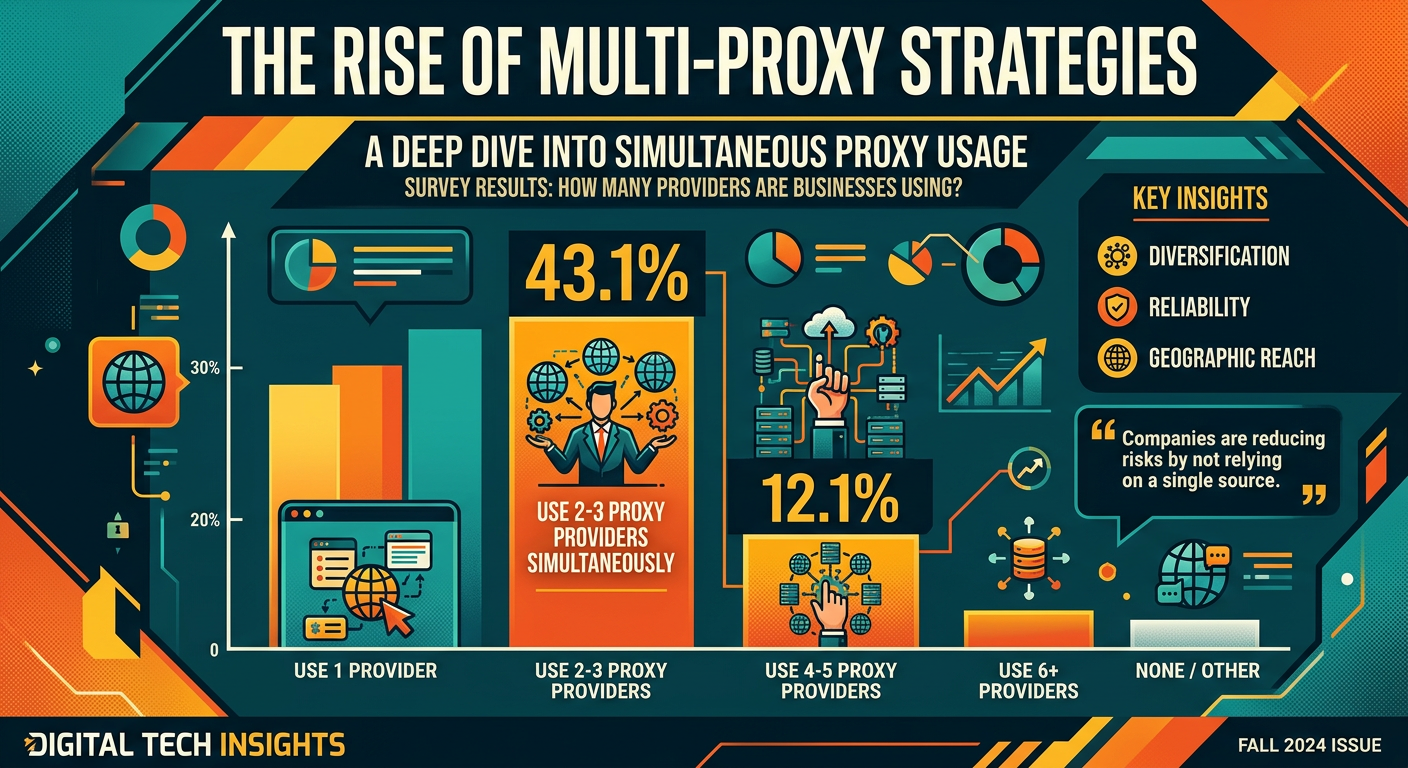
This multi-provider approach reflects operational maturity: redundancy against provider downtime, flexibility to match proxy type to target difficulty, and risk mitigation against any single provider’s IP pool being flagged en masse by a target site.
Residential and rotating proxy services remain the most cited approach for bypassing modern anti-bot defenses, alongside CAPTCHA solvers and web unlockers. The practical implication for scraping teams is to move away from single-provider dependency and build a tiered proxy stack: datacenter proxies for low-protection targets, ISP proxies for medium-protection, and residential proxies reserved for highest-friction targets.
This stack approach optimizes effective cost per successful request — the metric that actually determines ROI on proxy spend.
Also Read :