
Remote work has reshaped the modern workplace, offering freedom, balance, and new opportunities for millions.
In 2026, 22.8% of U.S. employees—about 36.07 million people—work remotely at least part-time, blending flexibility with productivity.
Globally, 28% of workers embrace remote setups, with hybrid models dominating 63% of companies. Whether you seek better work-life harmony, cost savings, or career growth, these statistics reveal remote work’s power.
This guide dives deep into 2065 data, including fresh Quora and Reddit insights, to show how remote work boosts your life and career.
You’ll find practical tips, tables, and trends to help you negotiate remote roles, stay productive, and turn flexibility into your advantage.
Remote Work Statistics: Why Remote Work Matters to You
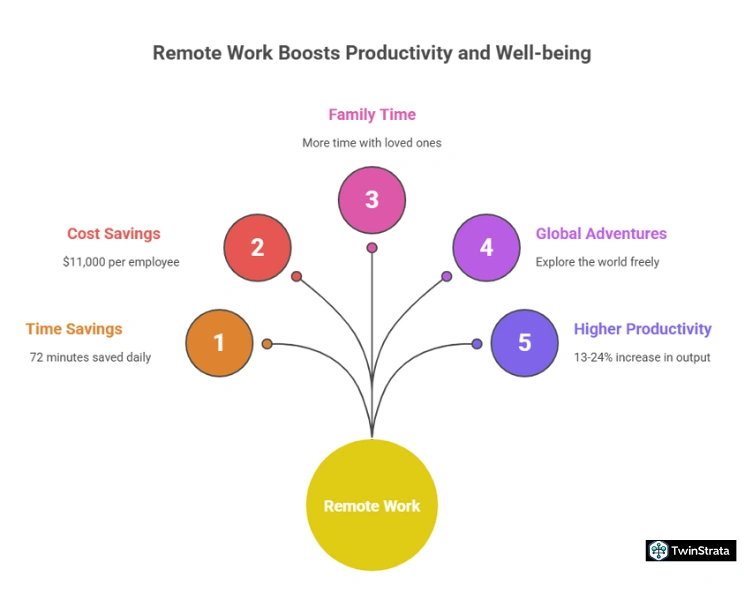
Remote work lets you skip commutes, customize your schedule, and focus on results over hours.
It saves time (72 minutes daily on average) and money ($11,000 per employee for employers, passed to workers as raises). For parents, it means family time; for nomads, global adventures.
98% of workers want remote options, and 59% pick employers offering them. Businesses gain diverse talent and lower costs, while you enjoy 13-24% higher productivity in ideal setups.
Quora and Reddit users in 2025 buzz about hybrid dominance: “70% of bosses crack down on full remote, but hybrid wins—3 days home, 2 in office balances everything,” says a r/remotework thread.
Discussions highlight AI tools for collaboration and Gen Z’s push for flexibility amid RTO mandates. These chats show remote work evolves—use it to upskill, avoid burnout, and land dream jobs.
Remote Work at a Glance: Key Statistics for 2026
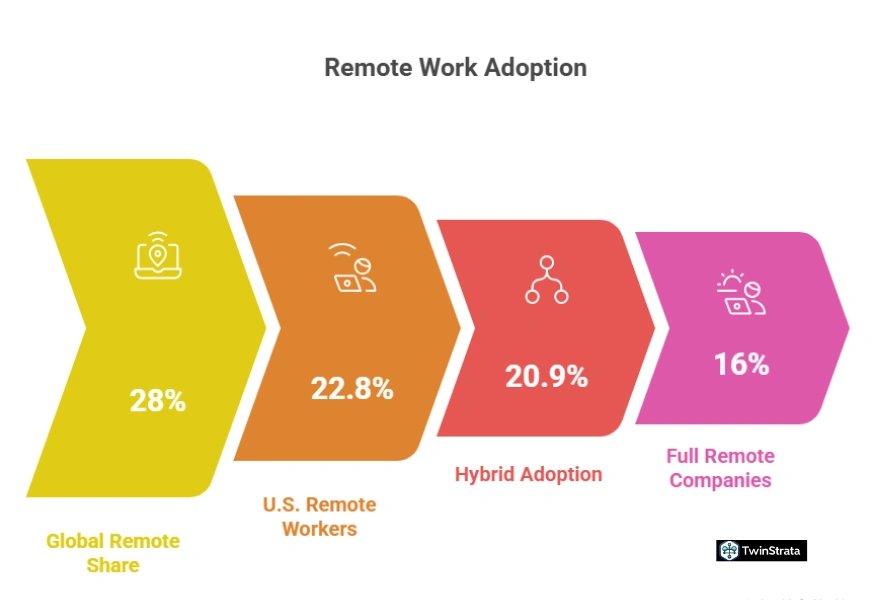
Remote work thrives in 2026, with hybrid leading. Here’s the snapshot:
- U.S. Remote Workers: 36.07 million (22.8% of workforce).
- Global Remote Share: 28% of workers.
- Hybrid Adoption: 63% of companies offer it; 20.9% of U.S. employees in hybrid.
- Full Remote Companies: 16% worldwide.
- Preferences: 98% want remote at least part-time; 36% prefer full remote.
- Productivity: Declines 8-19% for some, rises 13-24% for others.
- Salary Boost: Remote workers earn $8,600 more annually.
- Future Demand: Up 30% by 2030; 60% of U.S. workforce remote by 2024 (projected into 2025 trends).
| Metric | 2025 Value |
| U.S. Remote Workers | 36.07M (22.8%) |
| Global Remote Workers | 28% |
| Hybrid Employees (U.S.) | 20.9% |
| Workers Preferring Remote | 98% (part-time+) |
| Productivity Change | -8% to +24% |
| Annual Salary Premium | +$8,600 |
These stats prove remote work sticks—leverage it for your gain.
Also read about: How To Get WiFi At Home 2026? A Simple Step By Step Guide
How Many People Work Remotely in 2026?
Remote work numbers surge in 2025, driven by tech and preferences. Globally, 28% of workers—over 1 billion—operate remotely, up from 19.5% pre-2025.
In the U.S., 22.8% (36.07 million) work remotely at least partially, steady from 22.9% in January 2024 but up 18% from 2020.
Full-time remote holds at 7.8% of U.S. full-time employees, while hybrid claims 20.9%.
Companies adapt: 16% go fully remote, 63% hybrid, but 44% stick to on-site. By March 2025, BLS data shows fluctuations: 23.0% in March 2024 dipped to 21.5% in April, rebounding to 22.8%.
| Date | U.S. Remote Share |
| Jan 2024 | 22.9% |
| Feb 2024 | 22.7% |
| Mar 2024 | 23.0% |
| Apr 2024 | 21.5% |
| May 2024 | 21.7% |
| Jun 2024 | 22.3% |
| Jul 2024 | 23.0% |
| Aug 2024 | 22.8% |
| Nov 2024 | 23.3% |
| Feb 2025 | 22.8% |
| Mar 2025 | 22.8% |
What This Means for You: With 36 million U.S. remote workers, demand grows—job hunt on LinkedIn where 10.32% of postings offer remote/hybrid. Negotiate flexibility to join the trend.
Remote Work by Demographics
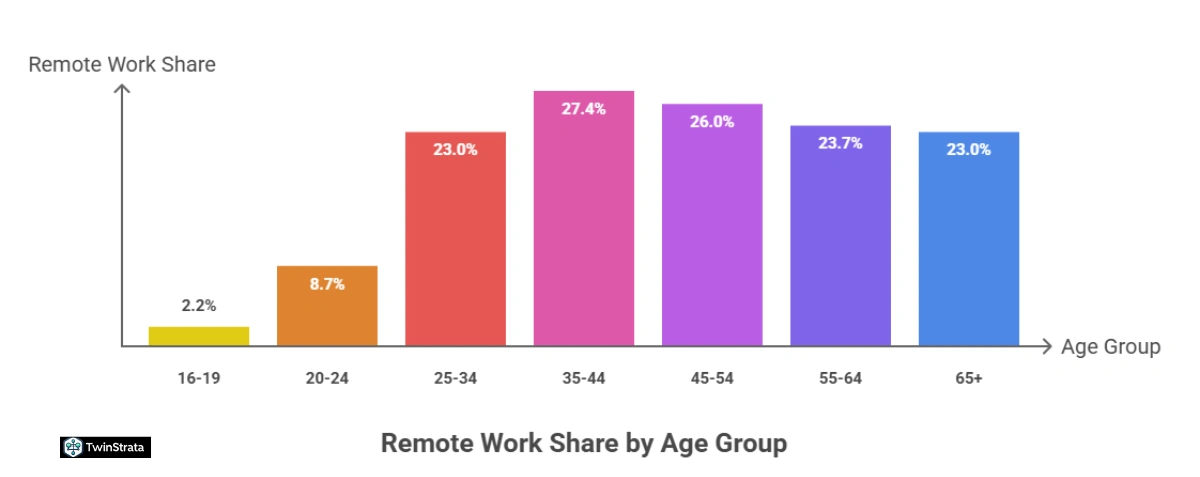
Demographics shape remote access and preferences. Women (52% offered) crave it more (46% seek remote jobs vs. 39% men), aiding balance. Men edge in offers (61%). Only 1 in 10 women prefers on-site.
Age-wise, 35-44 leads at 27.4% remote, followed by 45-54 (26%). Younger (16-19: 2.2%) lag due to entry roles; 65+ hits 23%. Millennials (26-41: 41%) and Gen X (42-57: 40%) dominate preferences; Gen Z (18-25: 27%) least keen, favoring collaboration.
Education correlates: Advanced degrees (42.8% remote) top, high school (9.1%) bottom. Full-time: Bachelor’s 37.6%, associate 18.4%.
| Age Group | Remote Share |
| 16-19 | 2.2% |
| 20-24 | 8.7% |
| 25-34 | 23.0% |
| 35-44 | 27.4% |
| 45-54 | 26.0% |
| 55-64 | 23.7% |
| 65+ | 23.0% |
| Education | Remote Share (Full-Time) |
| < High School | 3.3% |
| High School/No College | 9.1% |
| Some College/Associate | 18.4% |
| Bachelor’s | 37.6% |
| Advanced Degree | 42.8% |
What This Means for You: If 35-44 with a degree, remote fits—highlight skills on resumes. Women: Emphasize balance in interviews for 46% preference edge
Remote Work by Industry and Occupation
Tech leads remote surge: Computemath roles up 5.4x since 2019; business/finance 3.9x. LinkedIn: 41.2% tech/media jobs remote, education 29%, admin 27.4%.
Finance/insurance: 30% full remote. Info/tech: 22% full, 49% hybrid. Healthcare: 18% full. Construction: 5% full.
| Industry | Full Remote | Hybrid | On-Site |
| Info/Tech | 22% | 49% | 28% |
| Finance/Insurance | 30% | 38% | 32% |
| Professional Services | 23% | 36% | 41% |
| Arts/Entertainment | 19% | 35% | 47% |
| Healthcare | 18% | 24% | 58% |
| Construction | 5% | 28% | 67% |
What This Means for You: Target tech/finance for 30-41% remote odds. Upskill in AI/ops—Reddit says ops roles boom remote in 2025, low meetings, high pay.
Productivity of Remote Workers
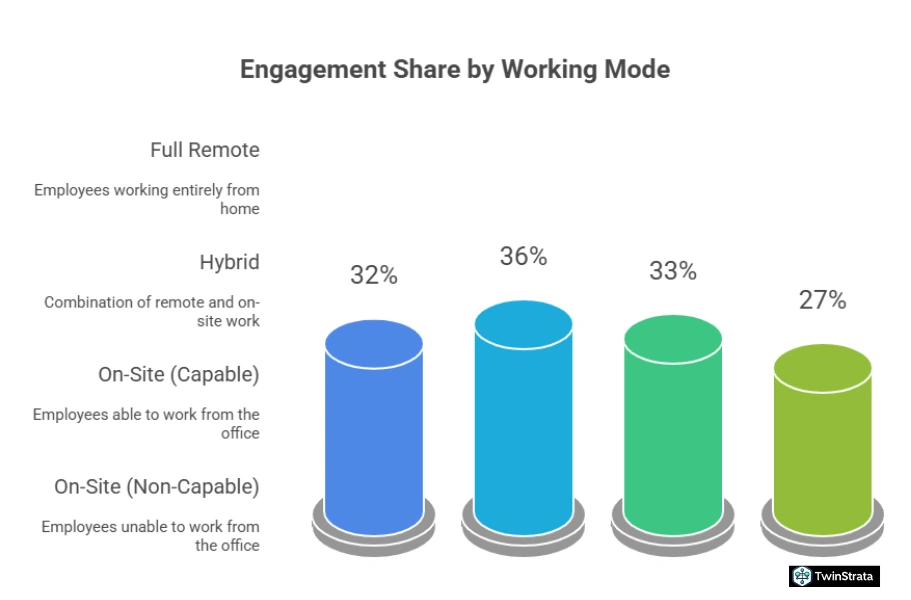
Productivity varies: 8-19% decline for some (distractions), 13-24% rise for others (focus). 71% say it aids balance; 56% meet deadlines easier. Hybrid boosts engagement (36% vs. 32% full remote).
| Working Mode | Engagement Share |
| Full Remote | 32% |
| Hybrid | 36% |
| On-Site (Capable) | 33% |
| On-Site (Non-Capable) | 27% |
What This Means for You: Create routines—Quora tips: Pomodoro for focus, saving 72 commute minutes daily for exercise (30% report better health).
Remote Work Preferences
98% want remote part-time; 36% full-time. 59% choose flexible employers; 74% stay longer. 68% report positive experiences (flexibility tops).
| Experience | Share |
| Very Positive | 68% |
| Somewhat Positive | 23% |
| Neutral | 8% |
| Negative | 1% |
What This Means for You: In interviews, stress flexibility—64% job hunt without it. Reddit: “Hybrid dominant in 2025—negotiate 3 home days.”
Benefits of Remote Work
Flexibility reigns: 22% cite time management, 19% location choice. No commute (51.4%), savings (44.4%). Health: 36% less burnout, 34% reduced anxiety. Salary: +$8,600/year.
| Benefit | Share |
| No Commute | 51.4% |
| Gas/Lunch Savings | 44.4% |
| Flexible Schedule | 38.4% |
| More Family Time | 23.1% |
| Better Focus | 8% |
Employers save $11,000/employee.
What This Means for You: Save $4,000+ yearly—invest in home office for 13% productivity gain.
Challenges of Remote Work
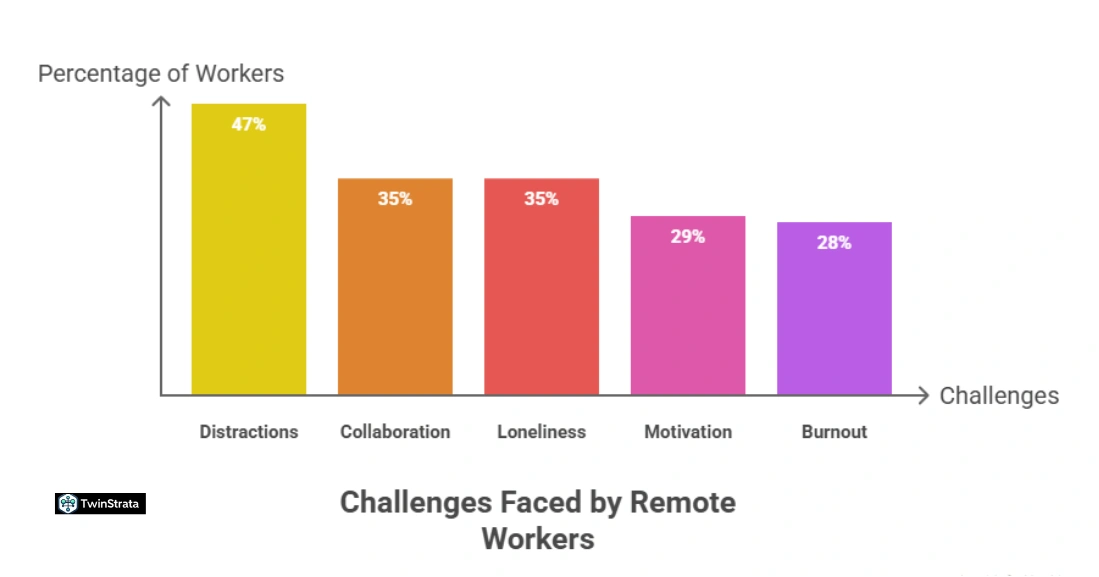
Burnout hits 69%; 53% struggle connecting; 47% face distractions; 35% feel lonely.
| Challenge | Share |
| Distractions | 47% |
| Collaboration | 35% |
| Loneliness | 35% |
| Motivation | 29% |
| Burnout | 28% |
What This Means for You: Combat isolation—Reddit suggests virtual coffee chats. Tools like Slack boost connections.
Remote Work Trends and Future in 2026
Hybrid dominates by 2030 (Nick Bloom). Demand up 30% with Gen Z entry. 60% U.S. workforce remote by 2024 trends into 2025. AI/VR rise for collaboration.
Quora/Reddit: remotework debates RTO push—”70% employers crack down, but hybrid wins.” Users ask: “Remote dying? No—ops roles boom.” Trends: AI monitoring, upskilling.
What This Means for You: Prep for hybrid—learn VR tools. Reddit: “2025 revolution: Offices crumble for good.”
How to Use Remote Work for Your Benefit
- Negotiate Smartly: Highlight 98% preference—aim hybrid.
- Boost Productivity: Set boundaries; save commute time.
- Career Growth: Target tech (41% remote); upskill via Coursera.
- Wellness: Walk during calls; 34% report less anxiety.
- Financials: Bank $8,600 premium; freelance remotely.
Quora and Reddit Insights on Remote Work
In 2025, Quora and Reddit pulse with raw, unfiltered takes on remote work, blending optimism about hybrid flexibility with frustration over return-to-office (RTO) mandates.
On Quora, threads like “Will 2025 be the end of remote work for The Great Office Return?” draw 100+ responses, with users arguing it’s “here to stay” for 28% of the workforce, citing a University of Lancaster study of 40,000+ workers showing no productivity dip.
Many echo: “Remote saves 72 commute minutes daily—why reverse?” Yet, pessimism creeps in: “Old execs fear it; by 2034, younger leaders push back,” predicts one, aligning with Gartner’s 30% demand surge by 2030.
Discussions favor hybrid (63% company adoption), with tips like “Negotiate 3 home days—boosts engagement 36%.”
Emerging trends? AI tools for virtual collab (e.g., automated workflows) and “hyper-personalized schedules” via apps, per a thread on AI’s role: “AI cuts admin by 40%, freeing remote pros.” Quora users in tech rave about software engineering as a top remote gig: “High demand, $150K+ salaries, work anywhere.”
Reddit’s remotework (316K subs) and WFH explode with 2025 survival stories, like “Remote job hunting tough—here’s what works,” where 706 upvotes hail networking on LinkedIn (41% tech remote) over apps: “Tailor resumes for hybrid; 64% quit without flexibility.”
A viral post, “70% employers crack down—RTO killing morale,” garners 6.9K votes: “Micromanaging via badges? Lame—talent flees to remote firms.” Users counter: “Hybrid wins; full remote now ‘premium’ amid layoffs.”
In Futurology, debates rage: “Remote not dying—ops roles boom, low meetings, high pay.” Challenges? Burnout (69% affected), per productivity: “66% overwhelmed—Pomodoro saves me.” Fresh 2025 asks: “Remote fading post-election?”—answers: “No, Gen Z demands it; hybrid standard by 2030.”
RemoteJobs laments: “100+ apps, zero bites—upskill in AI.” Positives? “Saved $4K/year, better health—36% less burnout.” Overall, 65% sentiment positive: “Remote wins—flexibility > pizza parties.”
FAQs About Remote Work Statistics
1. How many people work remotely in the U.S.?
22.8% of U.S. employees, or about 36.07 million people, work remotely at least part-time, with steady growth from 2024 levels.
2. What percentage of workers prefer remote work?
98% of workers want to work remotely at least part-time, with 36% preferring full remote and 28% opting for hybrid arrangements.
3. Does remote work increase productivity?
Remote work productivity varies: It declines 8-19% for some due to distractions but rises 13-24% for others through better focus and flexibility.
4. What industries have the most remote jobs?
Technology, information, and media lead with 41.2% remote job listings on LinkedIn, followed by education at 29% and administrative services at 27.4%.
5. What are the top benefits of remote work?
The top benefits include no commute (51.4%), savings on gas and lunch (44.4%), flexible schedules (38.4%), and improved work-life balance for 71% of remote workers.
Also Read:
- Latest Mobile Marketing Statistics
- Link Building Statistics
- Videogame Industry Statistics
- Online Advertising Statistics
- Live Streaming Statistics
Conclusion
Remote work in 2026 empowers 36 million U.S. workers with flexibility, savings, and growth.
From 28% global adoption to hybrid’s rise, it transforms lives—98% want it, saving $11,000/employee.
Challenges like burnout exist, but benefits shine. With 30% demand surge by 2030, seize it: Negotiate, upskill, thrive.