
The Channel Growing Faster Than Any Other in Ecommerce
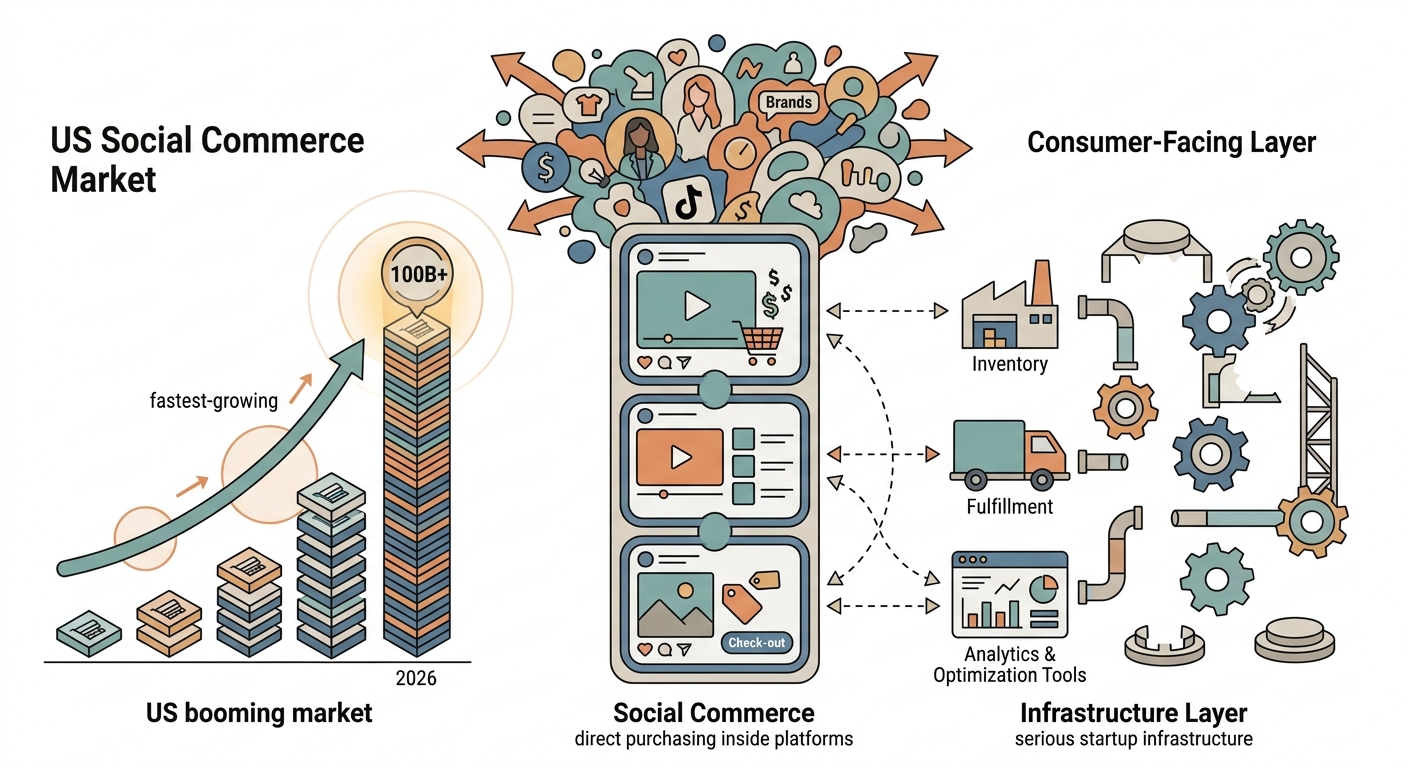
US social commerce sales are expected to exceed $100 billion in 2026. Social commerce — purchasing that happens directly inside social media platforms without leaving to visit a merchant website — is the fastest-growing ecommerce channel and, paradoxically, one of the least crowded spaces for serious startup infrastructure.
The consumer-facing layer is crowded with brands and creators. The infrastructure layer — the tools that make social commerce work at scale — is significantly less developed than the channel’s size warrants.
The gap exists because social commerce platforms built their commerce layers relatively recently and the tooling ecosystem around them has not caught up. TikTok Shop’s US infrastructure was built in 2023. Its affiliate and merchant tooling ecosystem is still immature.
YouTube Shopping is expanding rapidly but the merchant-side tooling for managing inventory, fulfilment, and analytics across YouTube commerce surfaces is fragmented and difficult to use. Instagram Shopping has been live longer but remains underserved by serious analytics and optimisation tools.
What Startups Are Missing
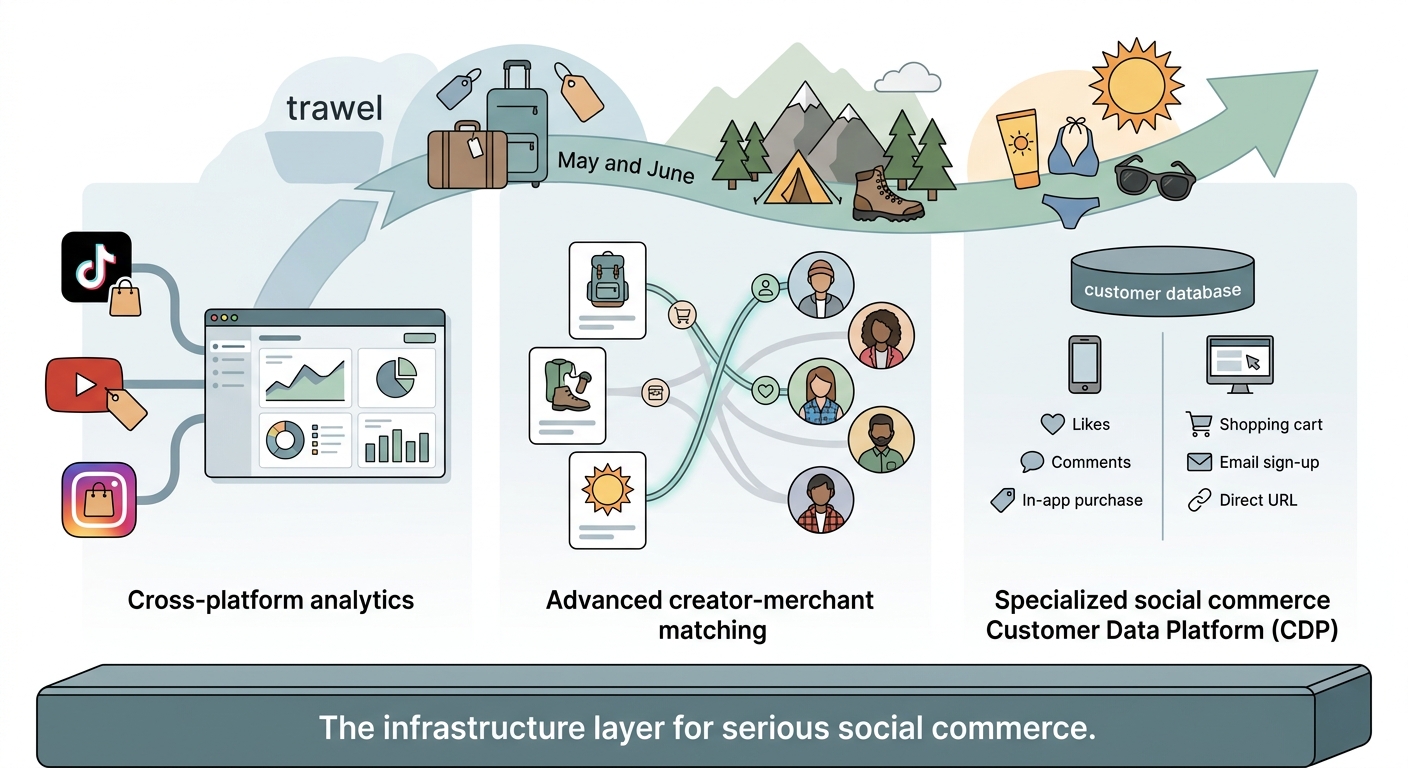
The categories most underserved by startup infrastructure in social commerce right now are: cross-platform social commerce analytics that unifies performance data across TikTok Shop, YouTube Shopping, and Instagram Shopping in a single view; creator-merchant matching tools that go beyond follower count to match products with creators whose audience purchasing behaviour actually aligns with the product category; and social commerce customer data platforms that help merchants understand the difference between their social commerce customer and their website customer.
Shopify’s seasonal business guidance calls out May through June as a strong window for travel gear, outdoor activity products, and hot-weather essentials — categories where social commerce performs particularly strongly because visual demonstration of the product’s value in seasonal contexts is highly shareable.
The merchants in these categories selling well through social commerce right now are doing it through manual systems and fragmented tools. The startup that builds the infrastructure layer for serious social commerce merchants is building for a $100 billion channel with inadequate tooling.
The TikTok Shop Signal
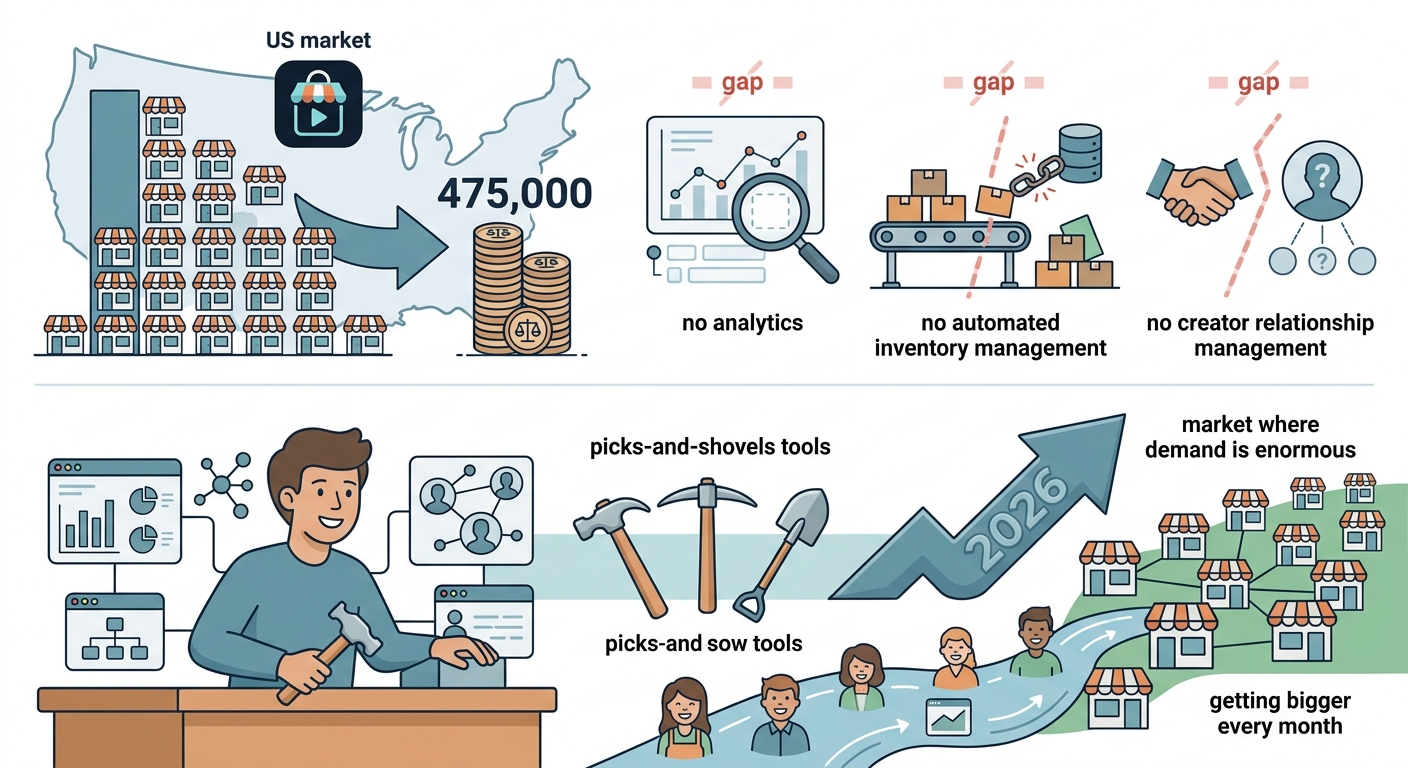
TikTok Shop now has 475,000 active shops in the US alone. That is 475,000 merchants operating on a single social commerce platform — and the vast majority of them have no sophisticated analytics, no automated inventory management connected to their TikTok Shop, and no creator relationship management system. Every one of those gaps is a startup opportunity in a market where the channel size justifies serious infrastructure investment.
The founders who build for social commerce infrastructure in 2026 — not another brand trying to sell products through it, but the picks-and-shovels tools that help merchants operate it — are entering a market where demand is enormous, current solutions are inadequate, and channel growth means the market is getting bigger every month.
💬 Reddit — r/ecommerce discussions on social commerce infrastructure gaps: 🔗https://www.reddit.com/r/ecommerce/search/?q=social+commerce+TikTok+Shop+startup+tools+2026
🐦 X/Twitter — ecommerce founders on social commerce infrastructure opportunities: 🔗https://x.com/search?q=social+commerce+infrastructure+startup+opportunity+2026&f=live
💬 Quora — best startup ideas in social commerce for 2026: 🔗https://www.quora.com/search?q=best+startup+ideas+social+commerce+TikTok+2026
Quick Links: