
Europe’s AI Act just added real teeth. Starting August 2, 2026, Article 50 transparency obligations became legally enforceable across the EU. Any company deploying certain AI systems in Europe now has to meet these new disclosure requirements.
The rules target a simple but important goal. People interacting with AI generated content need to know it. Chatbots must clearly identify themselves as AI, not humans. AI generated images, audio, and video need visible labels showing they were machine made. Deepfakes and synthetic media fall directly under this requirement.
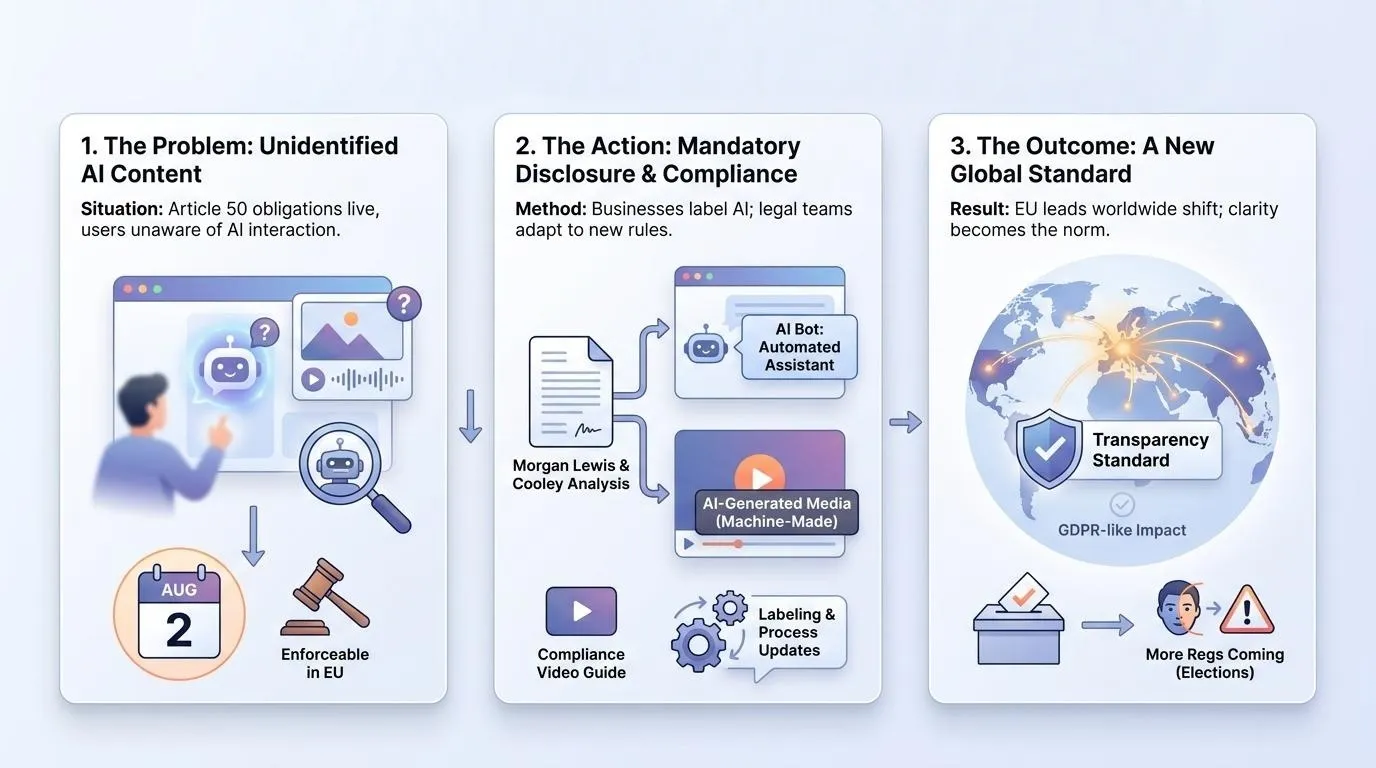
This video breaks down exactly what businesses need to do to comply: https://www.youtube.com/watch?v=qVoyZKcPbYg
Legal teams across the industry have been scrambling to prepare. Morgan Lewis published a detailed breakdown of what changed, noting the EU’s Digital Omnibus package added some clarifying language right before the deadline.
Cooley’s legal analysis pointed out that noncompliance can trigger real financial penalties, not just warnings.
The practical impact touches nearly every business using generative AI tools for content. Marketing teams generating AI images need new labeling practices. Customer service bots need clear AI disclosure at the start of conversations. Even internal tools that touch EU customers may fall under scope depending on how they are used.
This rollout matters beyond Europe too. The EU AI Act has become a global reference point, similar to how GDPR shaped privacy law worldwide.
Companies operating internationally are already adjusting their US and Asia based products to match EU transparency standards, since building separate systems for separate regions gets expensive fast.
The bigger trend here is regulation catching up to fast moving AI deployment. For years AI companies moved quickly with minimal disclosure requirements.
Now governments are stepping in to force clarity around what is AI generated and what is not. Expect more countries to follow the EU’s lead with similar transparency laws over the next year, especially as deepfake concerns grow ahead of major elections worldwide.
Quick Links: