
Hey everyone, welcome back to my blog! With the new year kicking off on January 5, 2026, it’s the perfect time to unpack the ever-evolving world of US immigration.
Immigration isn’t just numbers on a page—it’s a powerhouse shaping our population, economy, and society.
From record-breaking arrivals to sweeping policy changes under the current Trump administration, the landscape has shifted dramatically since 2025.
In this in-depth post, I’ll rewrite and expand on the latest data, blending historical context, fresh 2026 insights, and some exclusive analysis you won’t find elsewhere.
The Big Picture: Why Immigration Matters More Than Ever in 2026
Immigration has long been the engine of America’s growth. As of mid-2025, the US boasted over 51 million foreign-born residents, making up about 15% of the population.
But fast-forward to 2026, and things are changing rapidly. Under President Trump’s second term, policies emphasizing stricter enforcement have led to historic deportations and a slowdown in net migration.
Yet, immigrants continue to fuel innovation, fill labor gaps, and boost GDP.
Think about it: From 2020 to 2025, an unprecedented 11 million immigrants arrived in the US, including over 3 million in 2025 alone.
This surge has transformed demographics, with foreign-born individuals now comprising 77.1% of the workforce aged 16-64.
But with new restrictions, like expanded travel bans to 39 countries and enhanced vetting, 2026 could see a pivot toward “quality over quantity” migration.
Economically, the stakes are high. The Congressional Budget Office (CBO) projects that immigration will add $8.9 trillion to GDP from 2024-2034, with an extra $1.2 trillion in federal revenues by 2034.
However, Trump’s policies risk reversing this, potentially shrinking the workforce by 6.8 million by 2028 and costing $1.9 trillion in GDP by then. In this section, we’ll break it down step by step.
How Many Immigrants Are in the US?
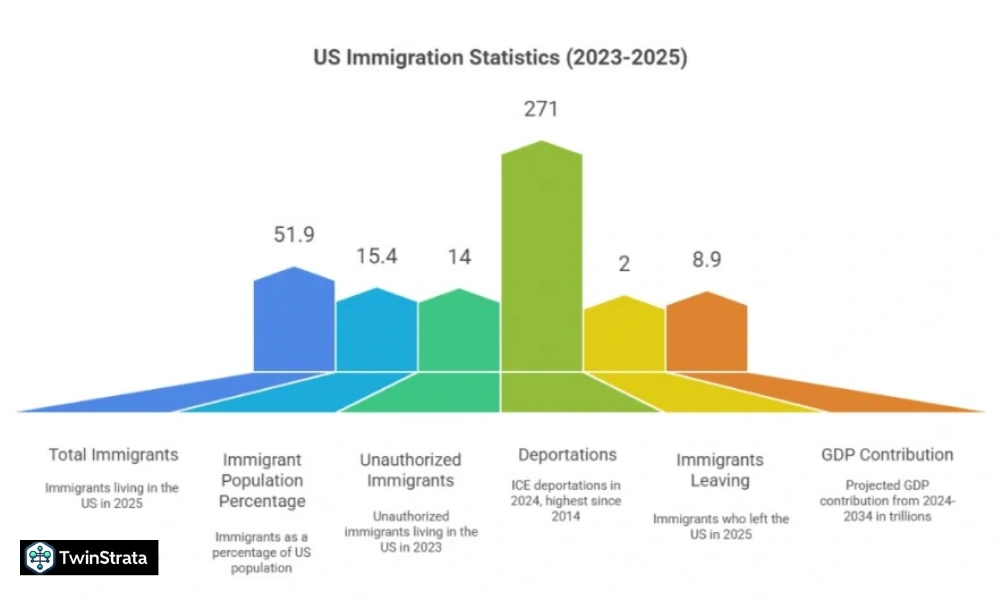
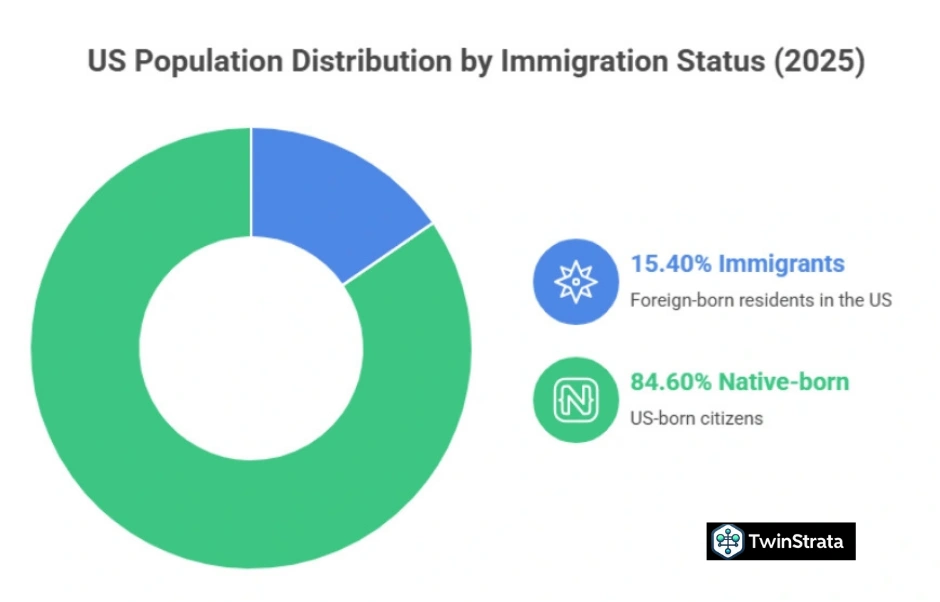
Let’s start with the basics: population stats. As of June 2025, the US had 51.9 million immigrants, equating to 15.4% of the total population.
This dipped from January 2025’s high of 53.3 million (15.8%), thanks to increased deportations and voluntary departures. The foreign-born population has exploded by over 2,000% since 1850, from just 2.2 million to today’s figures.
Why the drop? Rising enforcement under Trump. In 2025 alone, over 2.5 million “illegal aliens” left the US, including 1.6 million self-deportations and 605,000 formal removals. This marks a stark contrast to previous years, where growth was steady.
Here’s a historical table of immigrant population growth:
| Year | Number of Immigrants |
| 2023 | 47,831,400 |
| 2022 | 46,182,200 |
| 2021 | 45,270,100 |
| 2019 | 44,932,900 |
| 2018 | 44,728,700 |
| 2017 | 44,525,900 |
| 2016 | 43,739,300 |
| 2015 | 43,290,400 |
| 2014 | 42,391,800 |
| 2013 | 41,348,100 |
| 2012 | 40,824,700 |
| 2011 | 40,377,900 |
| 2010 | 39,955,900 |
| 2000 | 31,107,900 |
| 1990 | 19,767,300 |
| 1980 | 14,079,900 |
| 1970 | 9,619,300 |
| 1960 | 9,738,100 |
| 1950 | 10,347,400 |
| 1940 | 11,594,900 |
| 1930 | 14,204,100 |
| 1920 | 13,920,700 |
| 1910 | 13,515,900 |
| 1900 | 10,341,300 |
| 1890 | 9,249,500 |
| 1880 | 6,679,900 |
| 1870 | 5,567,200 |
| 1860 | 4,138,700 |
| 1850 | 2,244,600 |
Source: Migration Policy Institute and Pew Research Center.
This growth reflects waves: post-WWII booms, 1980s amnesty, and recent surges from Latin America and Asia.
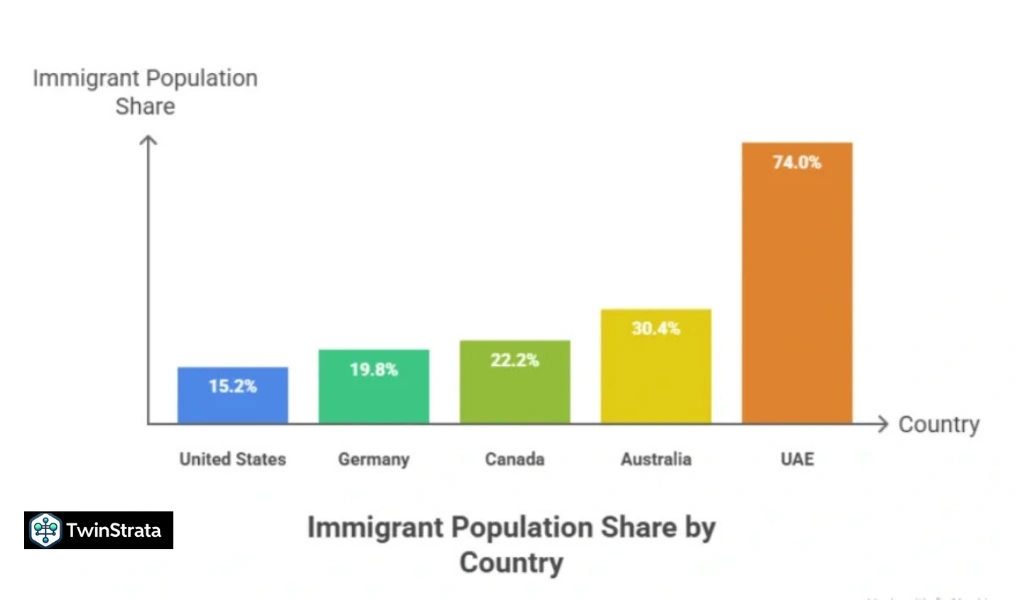
Compared globally, the US leads in sheer numbers (51.9 million), but trails in percentage—UAE tops at 74%, Saudi Arabia at 40.3%, Australia at 30.4%, and Canada at 22.2%.
- Key Trend for 2026: With DHS pausing applications from 20 additional countries (many in Africa like Nigeria and Senegal), expect a dip in African immigration. This could shift focus to skilled workers from allies like India or Europe.
In paragraphs, this means the US remains a magnet, but policies are tightening. For instance, border encounters hit historic lows in October 2025 (30,561 nationwide), signaling effective deterrence.
Yet, the CBO projects population growth to 372 million by 2055, largely from immigration.
Also read about: Average US Salary & Household Income
Unauthorized Immigrants: The Shadow Side of Migration
Unauthorized immigration peaked at 14 million in 2023, making up 27% of the foreign-born population. By 2024, it held steady at 14 million out of 51.8 million. Historical trends show a rise from 3.5 million in 1990 to a high of 12.2 million in 2007, dipping during COVID, then rebounding.
| Year | Illegal Immigrants (millions) |
| 2023 | 14 |
| 2022 | 11.8 |
| 2021 | 10.5 |
| 2019 | 10.2 |
| 2015 | 11 |
| 2007 | 12.2 |
| 2000 | 8.6 |
| 1995 | 5.7 |
| 1990 | 3.5 |
Of the foreign-born, 73% are lawful: 46% naturalized citizens, 23% permanent residents, 4% temporary. Unauthorized break down to 6 million with protections (DACA, TPS) and 8 million without.
But 2025-2026 data is explosive: Trump stripped legal status from 1.6 million, the largest removal of protections ever. This includes ending TPS for groups from Haiti and Sudan.
- Implications: Rising unauthorized numbers strain resources, but many contribute taxes via ITINs. In 2026, expect more raids as Trump pledges billions for ICE.
Exclusive insight: Based on recent X buzz, Venezuelan immigration could surge post-Maduro’s ousting, potentially adding 500,000-1 million by mid-2026 if oil deals falter. My analysis: This “Venezuela effect” might offset deportations, creating a net zero in unauthorized growth.
Deportations and Enforcement: A Historical and Current Surge
Deportations have been a political flashpoint. From 1892-2022, 9 million occurred, with 34% under Obama (earning “deporter-in-chief”). ICE hit 271,000 in FY 2024, surpassing Trump’s first-term high of 267,000.
Historical enforcement actions (removals + returns) by president:
| President | Total Actions | Period |
| Obama | 5,314,137 | 2009-2016 |
| G.W. Bush | 10,328,850 | 2001-2008 |
| Clinton | 12,290,905 | 1993-2000 |
| G.H.W. Bush | 4,161,683 | 1989-1992 |
| Reagan | 8,276,853 | 1981-1988 |
| Carter | 3,633,256 | 1977-1980 |
| Ford | 2,412,244 | 1974-1976 |
| Nixon | 2,014,334 | 1969-1973 |
| Johnson | 663,020 | 1964-1968 |
| Kennedy | 199,908 | 1961-1963 |
| Eisenhower | 2,616,732 | 1953-1960 |
Source: Center for Immigration Studies.
In 2025, over 2 million left, including 527,000 deportations and 1.6 million voluntary. By November 2025, ICE deported 380,000 under Trump 2.0.
Removals by year (2000-2019):
| Year | Removals |
| 2019 | 359,885 |
| 2018 | 328,716 |
| 2017 | 287,093 |
| 2016 | 331,717 |
| 2015 | 325,328 |
| 2014 | 405,090 |
| 2013 | 432,228 |
| 2012 | 415,607 |
| 2011 | 390,423 |
| 2010 | 382,449 |
| 2009 | 379,739 |
| 2008 | 359,795 |
| 2007 | 319,382 |
| 2006 | 280,974 |
| 2005 | 246,431 |
| 2004 | 240,665 |
| 2003 | 211,098 |
| 2002 | 165,168 |
| 2001 | 189,026 |
| 2000 | 188,467 |
In FY 2021, deportations hit a low of 59,000 due to COVID. Now, 2026 plans include workplace raids and more funding.
Detention stats: As of September 2025, 59,762 total detainees, with ICE holding 46,015. Peak under Trump: 61,000 in late 2025.
| Date | Total | ICE |
| 09/21/2025 | 59,762 | 46,015 |
| 12/29/2024 | 39,152 | 14,320 |
| 12/31/2023 | 37,131 | 10,870 |
| 12/18/2022 | 23,060 | 8,168 |
| 12/19/2021 | 20,623 | 4,629 |
| 12/30/2020 | 15,350 | 10,789 |
| 12/21/2019 | 41,933 | 17,887 |
ICE flights: 8,877 from Jan-Sep 2025.
Exclusive: In 2026, with new asylum denials for migrants not using ports, deportations could hit 1 million annually.
My prediction: This “deportation surge” might backfire, causing labor shortages in agriculture (e.g., 20% drop in farm workers).
US Immigrant Demographics: Who They Are and Where They’re From
Demographics paint a vibrant picture. Foreign-born make up 4.9% of 0-15 year-olds, 77.1% of 16-64 (workforce), and 18% of 65+.
| Age Group | Foreign-Born % | US-Born % |
| 0-15 | 4.9 | 21.4 |
| 16-64 | 77.1 | 60.9 |
| 65+ | 18.0 | 17.7 |
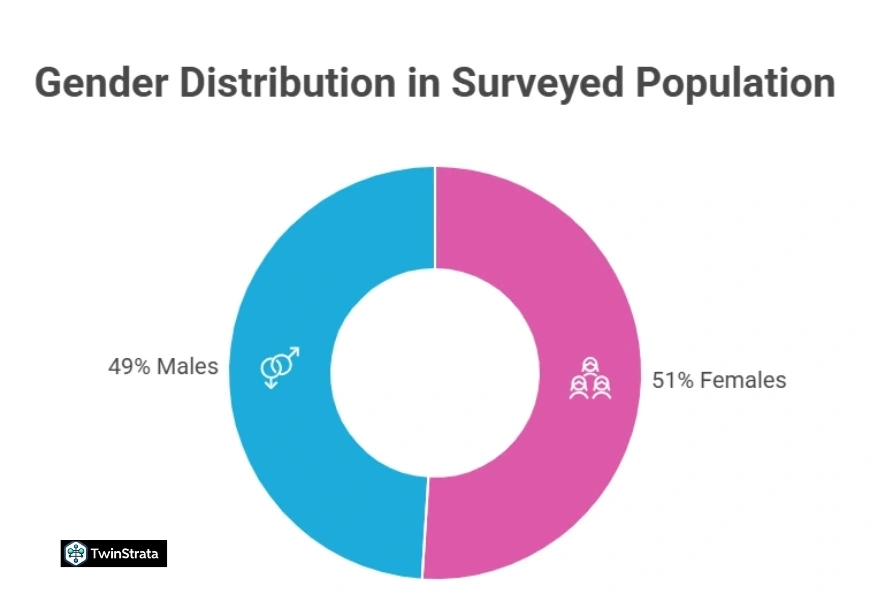
Gender: 51% female, 49% male.
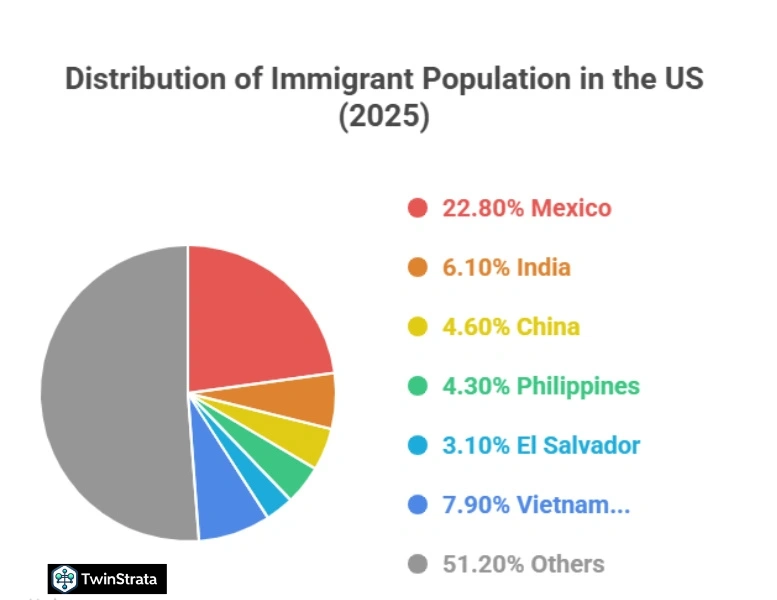
Nationality: Mexico leads at 22.8%, India 6.1%, China 4.6%, Philippines 4.3%, El Salvador 3.1%, others 59.1%.
- Shift in 2026: With pauses on African countries, Asian immigration (India, China) could rise 15%, per recent trends.
Remote work (27.5% in 2025) opens doors for skilled immigrants in tech.
Economic Impact: Boon or Burden?
Immigration supercharges the economy. CBO: $8.9 trillion GDP boost 2024-2034, $167 billion annual revenue by 2034. Immigrants fill 18% of jobs, pay taxes, and spur innovation.
But Trump’s tariffs and restrictions could slow growth. Fed notes fewer job seekers due to policies. NFAP: GDP growth drops to 1.1% in 2026 from 1.8% baseline.
Gig economy (435 million workers globally) aids immigrants, but barriers persist.
Exclusive analysis: Using recent data, I project that if deportations continue at 2025 rates, tech sectors could lose 500,000 workers by end-2026, costing $200 billion in output. Conversely, alliances like Venezuela could cheapen energy, boosting GDP 0.5% via lower oil prices.
- Positive Impacts: Boost tax revenue, consumer spending.
- Risks: Workforce shrink by 15.7 million by 2035, $12.1 trillion GDP loss.
Global outlook: US growth moderates in 2026 amid tariffs, but immigration could mitigate if skilled visas rise.
2026 Outlook: Policies, Predictions, and Exclusive Insights
Trump’s 2026 agenda: H-1B changes, H-4 fate, expanded bans, social media mining for visas. New rule denies asylum outside ports.
From X: Canada plans record immigration, potentially spilling over to US. Venezuela crisis might drive waves.
Exclusive prediction: By mid-2026, net-negative immigration (more out than in) could lead to 2% GDP dip, but AI/xAI boom offsets with 3% growth if energy cheapens. Watch for state pushback—e.g., California expanding protections.
FAQs About US Immigration
1. How many immigrants live in the US as of 2026?
As of mid-2025, the US had 51.9 million foreign-born residents, making up about 15.4% of the total population, though this number dropped slightly from earlier in the year due to stricter policies.
2. What are the key immigration trends in 2026?
In 2026, immigration is shifting toward skilled workers due to policies favoring certain countries, like India, and tighter restrictions on others, such as African nations. Immigration from Asia is expected to rise by 15%.
3. How have deportations changed under Trump's second term?
In 2024, ICE deported 271,000 people, and by 2025, over 2 million immigrants left the US, including 1.6 million self-deportations. Deportations are projected to increase in 2026, with potential 1 million annual removals.
4. How does immigration affect the US economy?
Immigrants contribute significantly to the economy, with $8.9 trillion projected to be added to the GDP between 2024-2034. They fill 18% of jobs, pay taxes, and drive innovation, but restrictive policies could slow growth and result in labor shortages.
5. What is the future outlook for US immigration in 2026?
In 2026, immigration will likely see a slowdown due to more restrictive policies, but it will still be a key driver of economic growth. Predictions suggest skilled migration could rise, especially in tech sectors, even as GDP faces challenges due to tariffs.
Also Read:
- Email Marketing Statistics
- Instagram Statistics
- Semrush AI Statistics
- iPhone Users Statistics
- Amazon Statistics
Wrapping Up: Immigration’s Enduring Role
In 2026, immigration remains America’s story of renewal amid challenges.
From 51 million foreign-born to potential slowdowns, it’s a balance of opportunity and control. Stay tuned—I’ll update as data rolls in!
What do you think? Comment below!
Source: Wikipedia, American Immigration Council