
Salesforce going headless this week crystallized something that has been building for months: we are entering the era of agent-native software. The companies that grasp what this means right now — and build accordingly — will have a structural advantage over the ones that figure it out two years from now when the market has already moved.
What Agent-Native Actually Means for a Startup
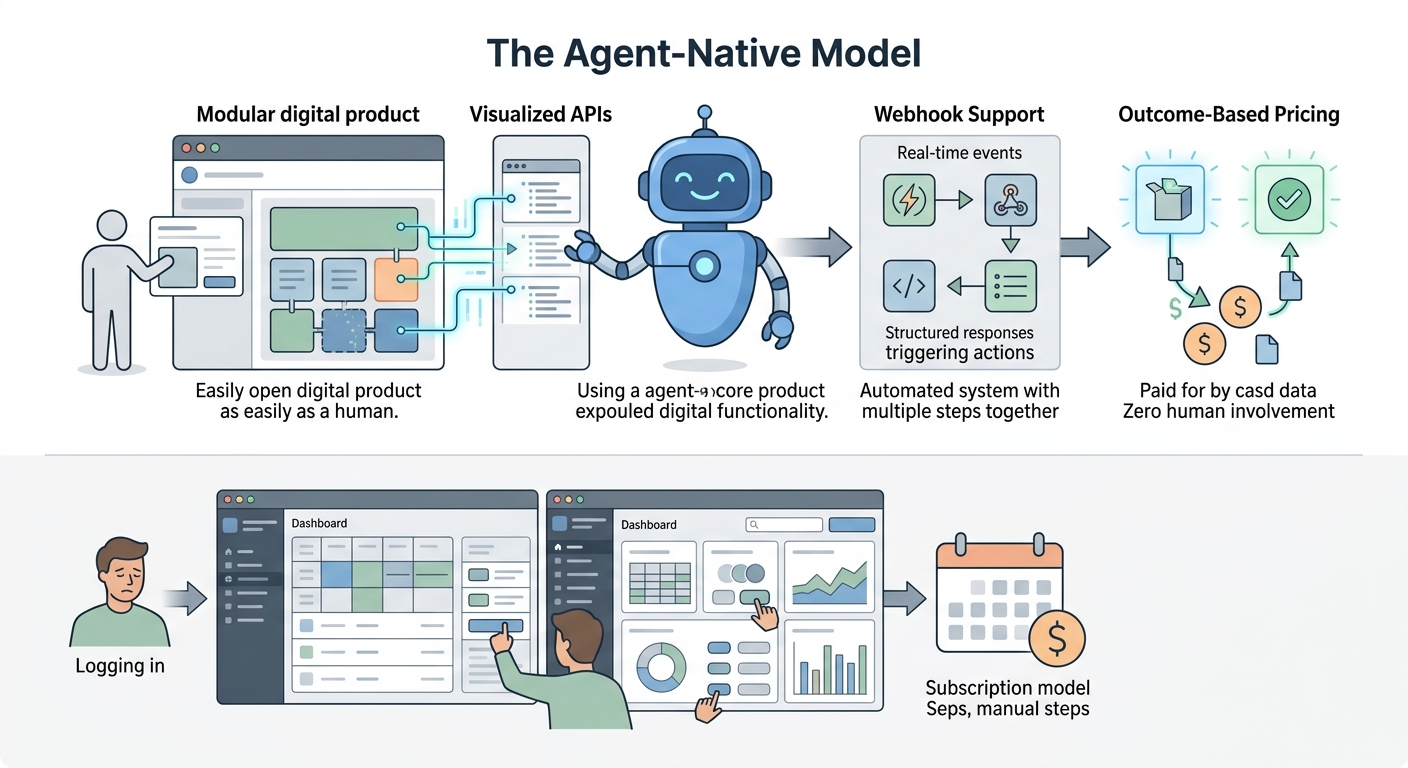
Agent-native does not mean building AI features into your product. It means building your product so that AI agents can use it as easily as humans can — or more easily. It means clean APIs that expose your core functionality. It means webhook support so agents can react to events in real time. It means outcome-based pricing that makes sense when an AI is the user, not just a human on a monthly subscription.
The traditional SaaS model was built around human users who log in, navigate a dashboard, and manually trigger actions. The agent-native model is built around automated systems that call APIs, receive structured responses, and chain actions together without any human in the loop.
How to Build Agent-Ready From the Start
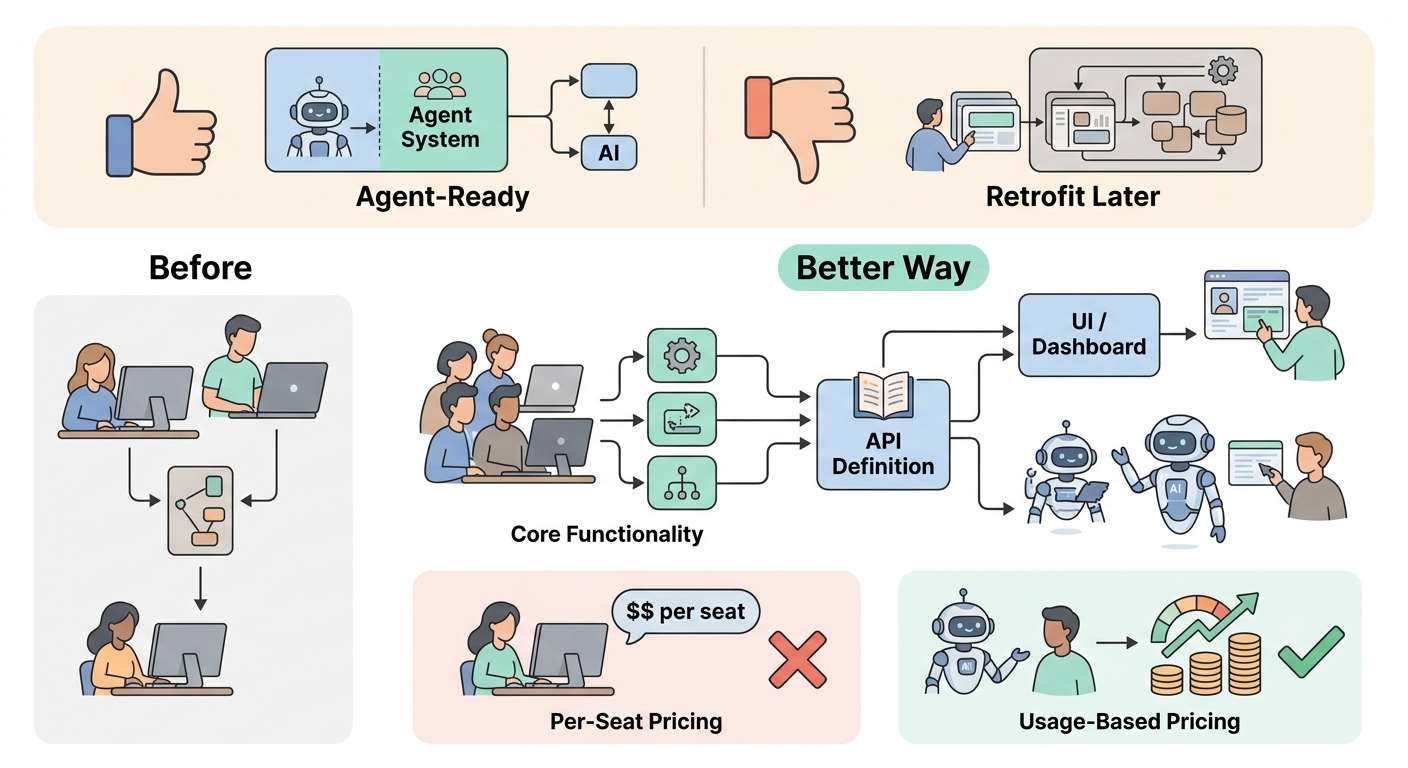
If you are building a SaaS startup right now, the most valuable architectural decision you can make is to design your API before you design your UI. Make your core functionality accessible programmatically first, then build the human interface on top of it. This means your product is usable by AI agents from launch, not after a painful retrofit 18 months later.
Document your API thoroughly — agents and the developers configuring them need clear documentation to integrate reliably. And think about your pricing model early: per-seat pricing does not make sense when an AI agent is your primary user. Outcome-based or usage-based pricing aligns better with how agent-native workflows actually consume software.
The startups that are agent-native from day one will not just survive the shift. They will be the ones that define what the next generation of software looks like.
Quick Links: