
The conversation around starting a business in 2026 is full of contradictions. On one side: AI tools have made it cheaper, faster, and more accessible to build products than at any previous point in history. On the other: the same AI capabilities that empower founders are also flooding every market with more competition, faster iteration, and more noise. Understanding which side of that equation your startup idea sits on is the most important strategic question you can ask before you commit.
The SaaS funding landscape has transformed. Horizontal SaaS platforms targeting broad markets still get funded, but investor appetite right now is strongest for vertical AI SaaS. Companies building AI-native tools for specific industries — healthcare, legal services, fintech, clinical trials — are rising faster and at higher valuations than general-purpose tools. The reason is simple: vertical solutions show faster time-to-value, stronger retention, and higher willingness to pay. SaaS Ultra
This is the core insight for anyone starting a business right now. Breadth is a liability. Specificity is an asset. The founders who are building durable companies are not trying to build the next all-in-one platform. They are solving one specific, painful, expensive problem for one specific type of customer — and they are solving it better than anyone else.
The AI tools advantage is real
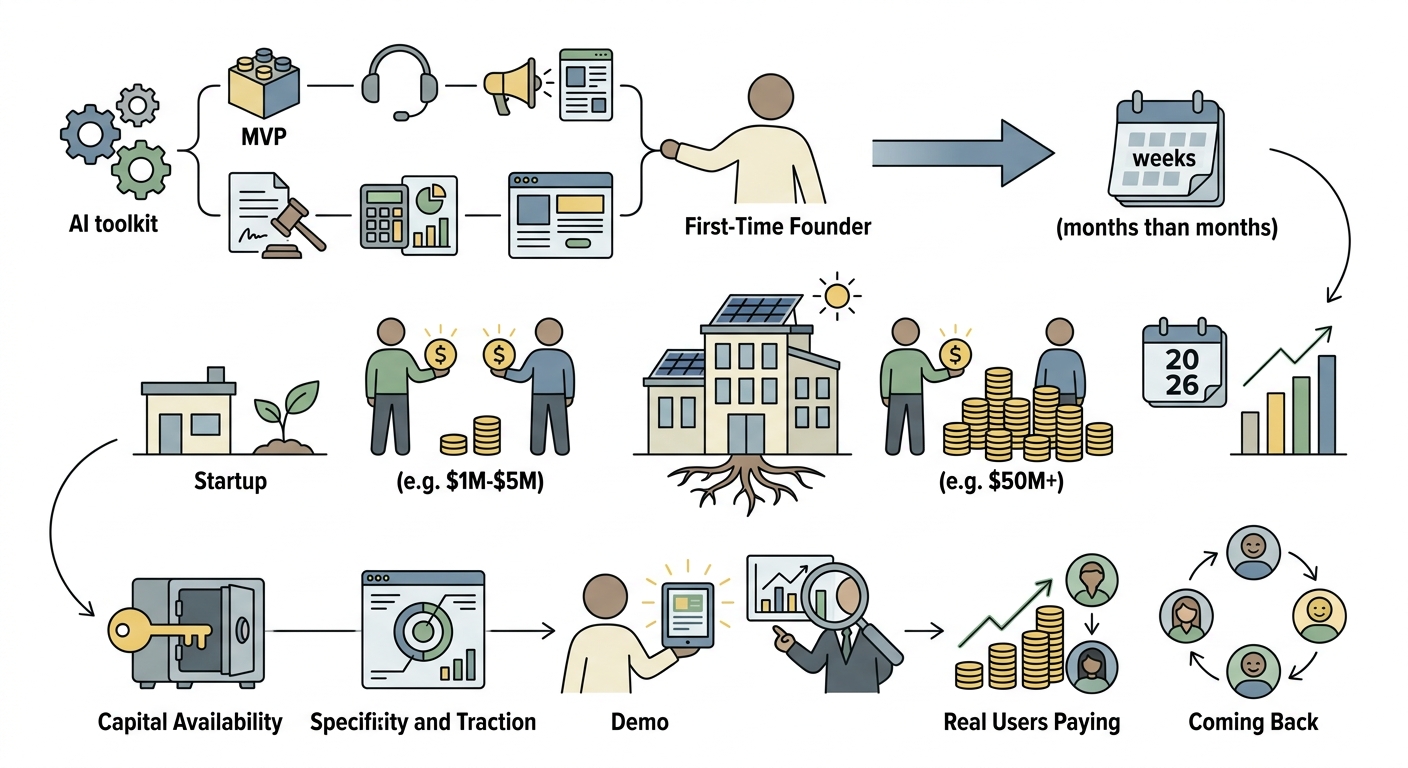
For first-time founders in particular, the current AI tool landscape is genuinely transformative. You can build a functional MVP in weeks rather than months. You can handle customer service at an early scale without hiring a team. You can generate marketing content, draft legal documents, produce financial models, and build landing pages at a cost that was simply not accessible to solo founders three years ago.
Early AI-driven SaaS startups may secure between $1 million and $5 million in funding. Mature startups can raise $50 million or more. The 2026 trend shows rising investor interest in larger rounds for companies demonstrating strong product-market fit and scalable AI solutions.
The capital availability is real, but it comes with the caveat we have already established — investors want specificity and traction. A demo built in two weeks using AI tools is table stakes. What matters is whether real users are paying for it and coming back.
Where new founders struggle most
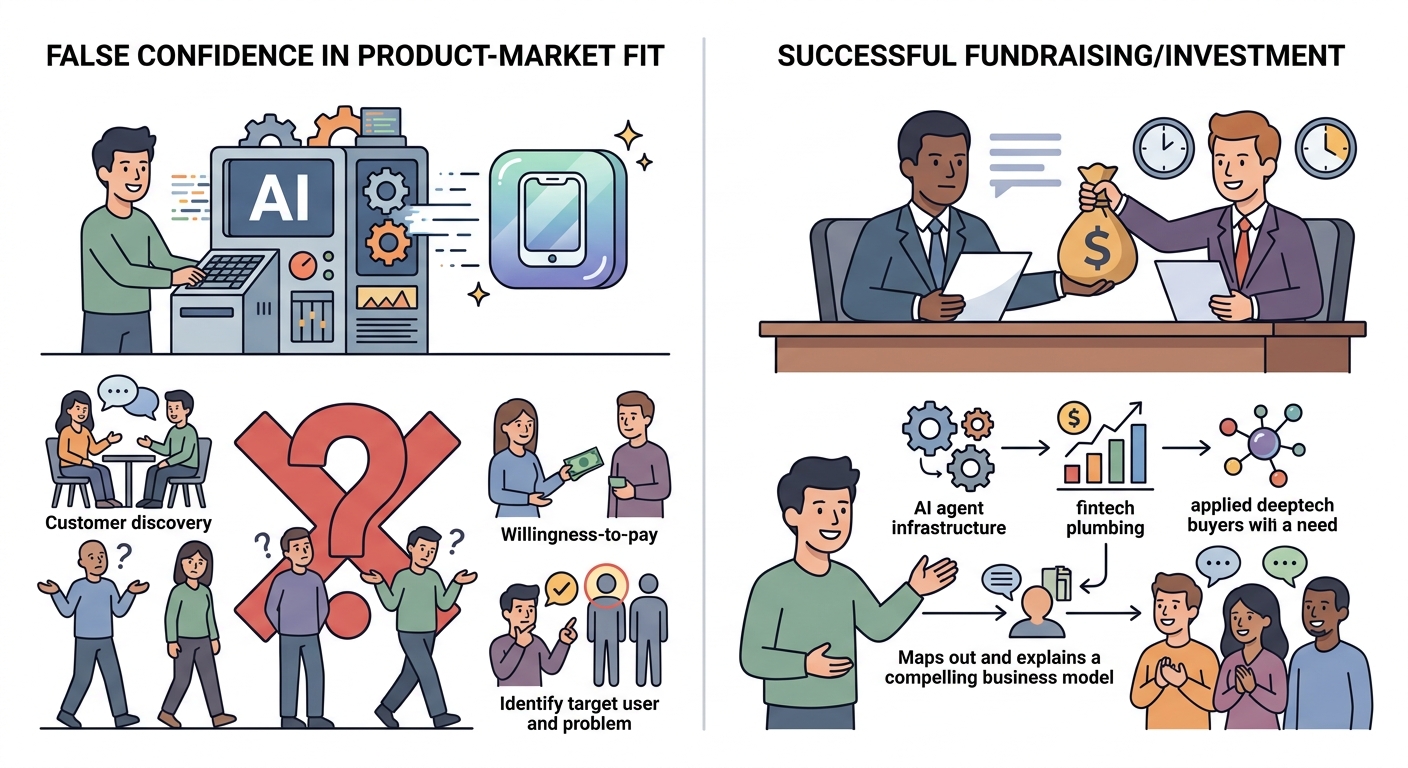
The area where AI tools create the most dangerous false confidence is in product-market fit. You can use AI to build something polished and functional very quickly, but building something polished is not the same as building something people actually need. The validation work — the customer discovery conversations, the willingness-to-pay testing, the identification of who specifically has the problem you are solving — cannot be automated. That is still human work.
Vague AI claims and feature-heavy decks are being ignored by investors. The startups getting funded right now can map directly to a hot capital narrative — AI agent infrastructure, fintech plumbing, applied deeptech — and back it with real buyer logic. If your startup cannot do that in under two minutes, fundraising is going to be much harder regardless of how good the product is. SaaS Ultra
💬 Reddit signal: r/startups and r/Entrepreneur are seeing significant growth in posts from first-time founders who built something quickly with AI tools and are now struggling to find customers. The most upvoted advice consistently says the same thing: talk to 50 potential customers before writing a single line of code. AI speeds up building. It does not speed up learning what to build.
🐦 Twitter/X signal: Startup founders on X who are sharing their journeys openly are generating significant engagement. The posts that resonate most are the honest ones — founders talking about the gap between building with AI tools and actually finding product-market fit. The audience for this content is enormous because the experience is nearly universal.
Starting a business in 2026 is the most accessible it has ever been. But accessibility is not the same as ease. The fundamentals of building something people want, at a price they will pay, with enough defensibility to sustain a business — those fundamentals have not changed. AI tools make the building faster. They do not change what you should build.
Quick Links: