
Infrastructure Is Now a Competitive Moat — Not Just a Cost
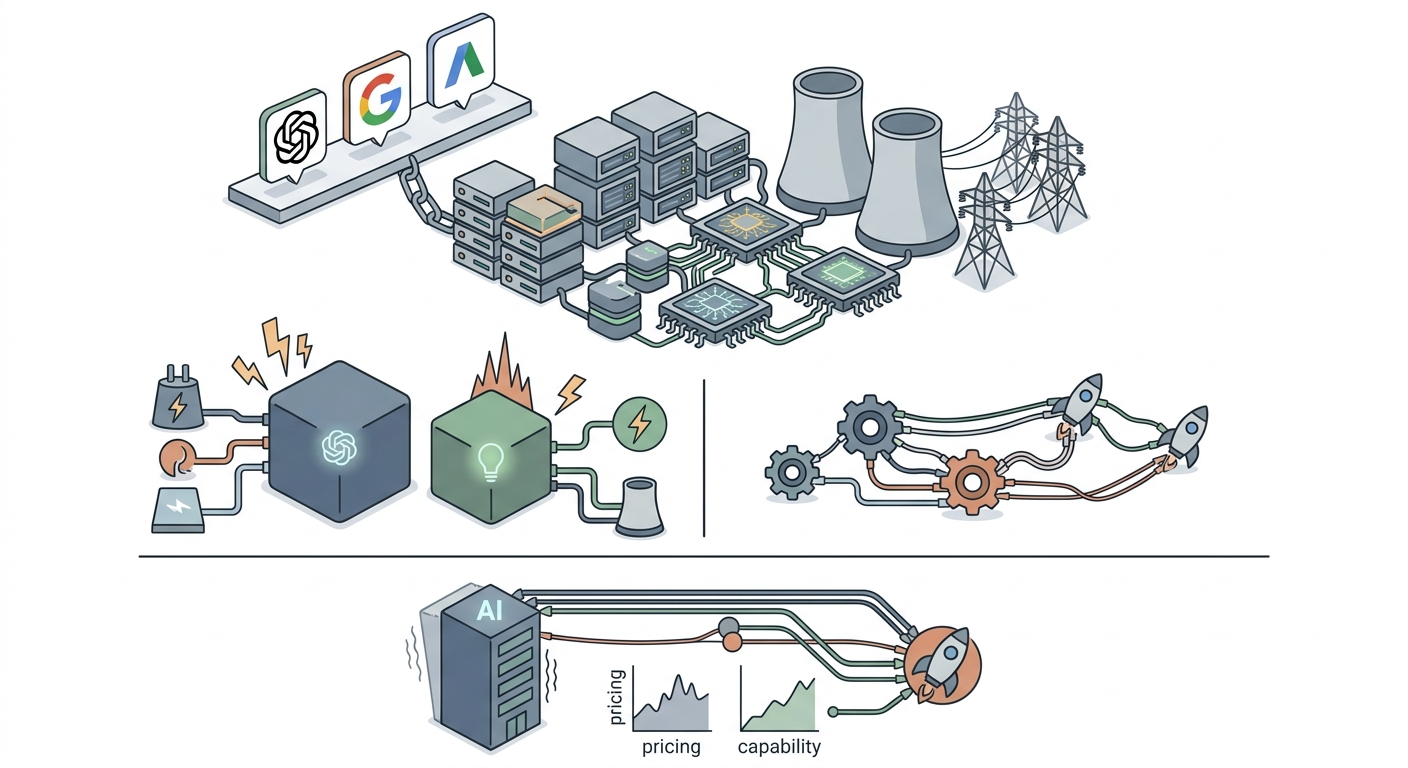
A pattern running through AI news in May 2026 that has not received enough attention from startup founders is the intensifying battle over compute infrastructure. The three major foundation model companies — OpenAI, Anthropic, and Google — are not just competing on model quality.
They are competing for the physical infrastructure — chips, data centres, power agreements — that determines who can train the next generation of models and at what cost. Reports on OpenAI, Anthropic, and Google point to a market where infrastructure owners can shape pricing, access, and product survival. Compute is now a business risk. Small firms usually feel these shifts first. Large firms can absorb legal ambiguity, cloud cost spikes, and vendor lock-in. Small firms cannot.
For founders building AI-powered startups, this infrastructure battle has a direct and underappreciated implication: the pricing and availability of the AI capabilities your product depends on are not stable. They are subject to the competitive dynamics, infrastructure investments, and strategic decisions of companies with very different priorities from yours.
A startup that has built its entire product on a single AI provider’s API, at current pricing, with current capability assumptions, is taking a concentration risk that most founders have not explicitly evaluated.
What Vendor Concentration Risk Looks Like in Practice
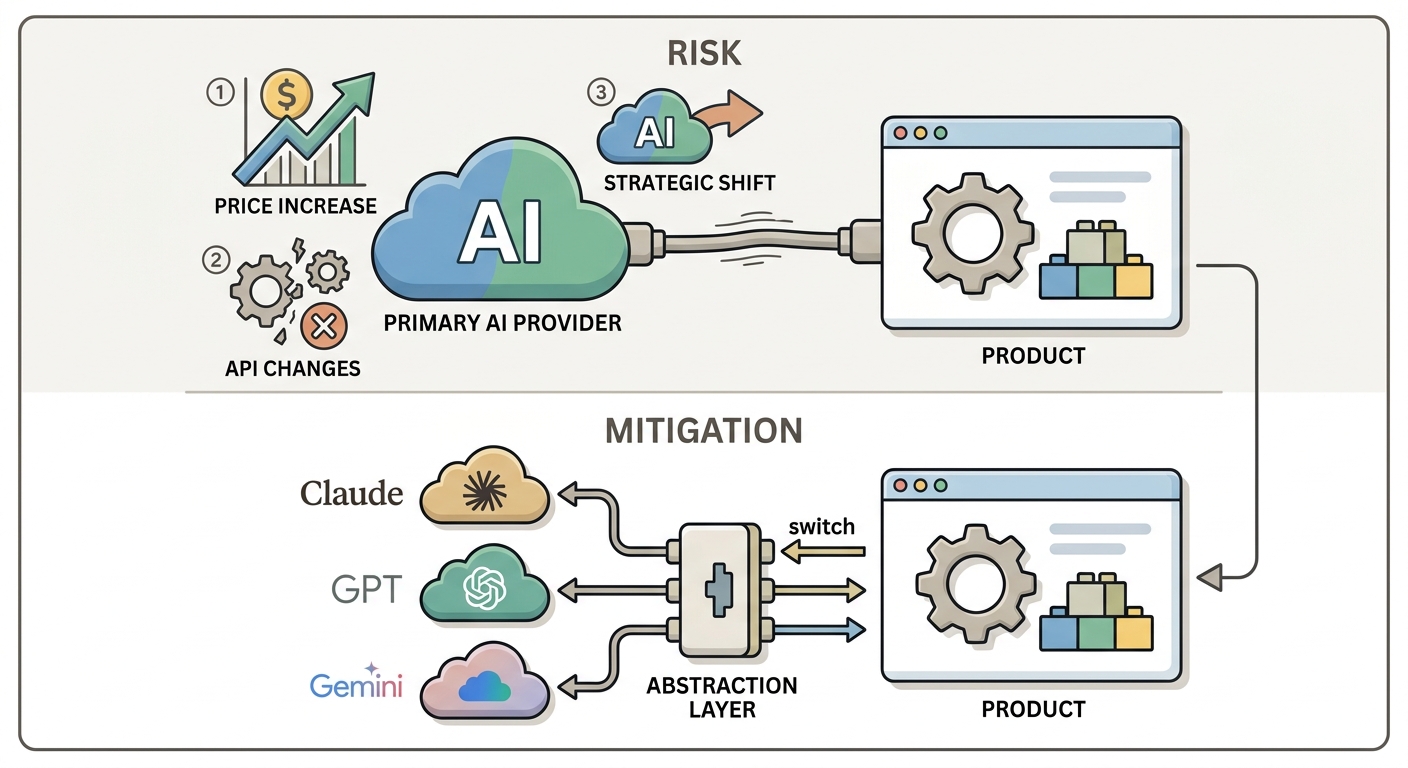
Vendor concentration risk in AI infrastructure means: if your primary AI provider raises prices, changes their API, or shifts their strategic focus away from your use case, your product’s economics or capabilities change in ways you did not plan for. This has already happened in the market.
Several AI providers have changed pricing structures multiple times since 2024. Context window limits, rate limits, and model capability changes have forced product teams to rebuild features on short timelines.
The mitigation is not to avoid AI providers — that is not realistic. It is to design your architecture so that the AI layer is as abstracted as possible from your product’s core logic. If switching the underlying model from Claude to GPT to Gemini requires a two-week engineering project, you have reasonable flexibility. If it requires a six-month rebuild, you have a serious risk.
Distribution Beats Novelty — The Lesson From Failed AI Startups
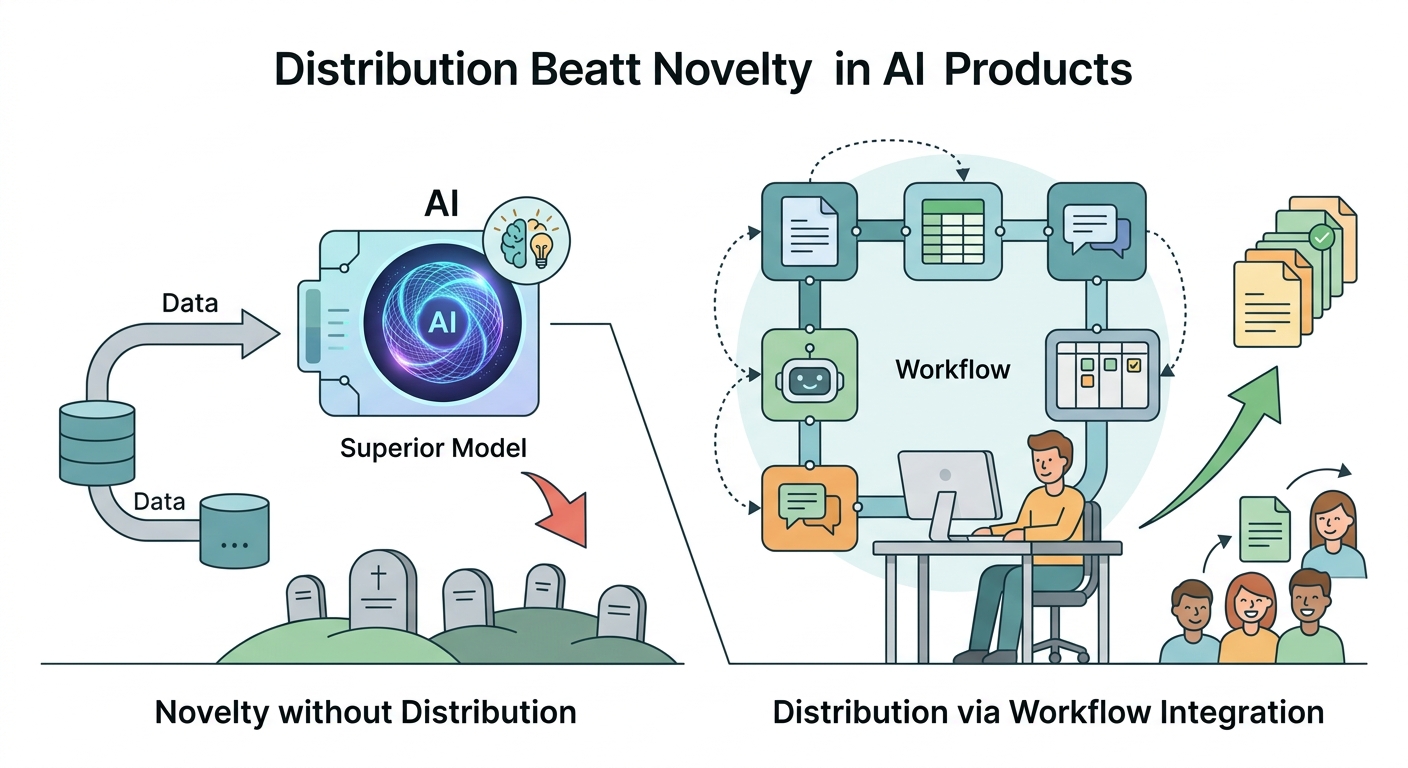
Distribution beats novelty. A model can be smart and still lose if another tool owns the workflow, bundle, or default channel. The startup graveyard from 2024 and 2025 is full of technically excellent AI products that could not get distribution. The companies that own the workflow — the tool people use every day to do their actual work — have structural distribution advantages that a superior standalone product cannot overcome.
For founders building in 2026, the strategic question is not “how do we build the best AI model” — that is not a startup game. It is “which existing workflow can we integrate into so deeply that our AI capability becomes the default choice within that workflow?” The startups winning are the ones that went integration-first rather than product-first.
💬 Reddit — r/startups discussions on AI infrastructure risk for startup founders: 🔗https://www.reddit.com/r/startups/search/?q=AI+infrastructure+vendor+risk+startup+2026
🐦 X/Twitter — founders discussing compute war and startup AI dependency: 🔗https://x.com/search?q=AI+compute+war+startup+vendor+lock+2026&f=live
💬 Quora — how should startups manage AI provider dependency risk: 🔗https://www.quora.com/search?q=startup+AI+provider+dependency+risk+management+2026
Quick Links: