
Three Companies, $200 Billion, and a Reckoning
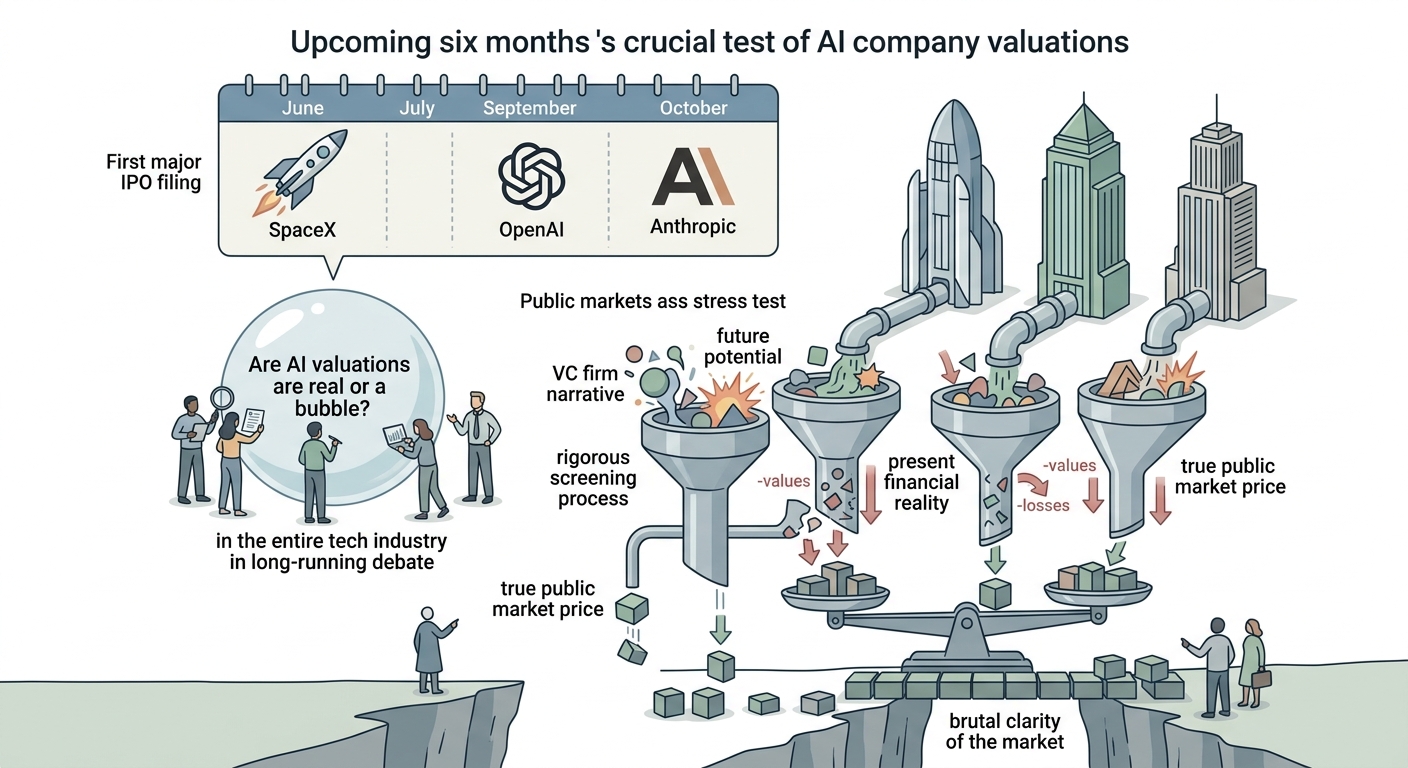
The next six months will answer a question that the entire tech industry has been arguing about for two years: are AI company valuations real, or are they a bubble waiting to deflate? The answer is coming whether we are ready for it or not, because three of the most anticipated IPOs in stock market history are all filing in 2026 — SpaceX, OpenAI, and Anthropic — and public markets have a way of cutting through the narrative with brutal clarity.
SpaceX is targeting a $1.75 trillion valuation on the Nasdaq on June 12. OpenAI is targeting above $1 trillion in September. Anthropic is targeting $400 to $500 billion in October. Together these three listings could demand over $200 billion from public markets.
That $200 billion absorption figure is the stress test. Public markets are not venture capital — they have millions of participants with different time horizons, risk tolerances, and analytical frameworks. A VC firm can decide a company is worth $800 billion because of its strategic position and future potential. A public market prices companies on the intersection of those future hopes and present financial reality.
The present financial reality for OpenAI is $14 billion in annual losses. For SpaceX it is $4.94 billion in net losses on $18.67 billion revenue. These are not tiny inefficiencies — they are significant structural positions that public market investors will price.
What Startup Founders Should Watch
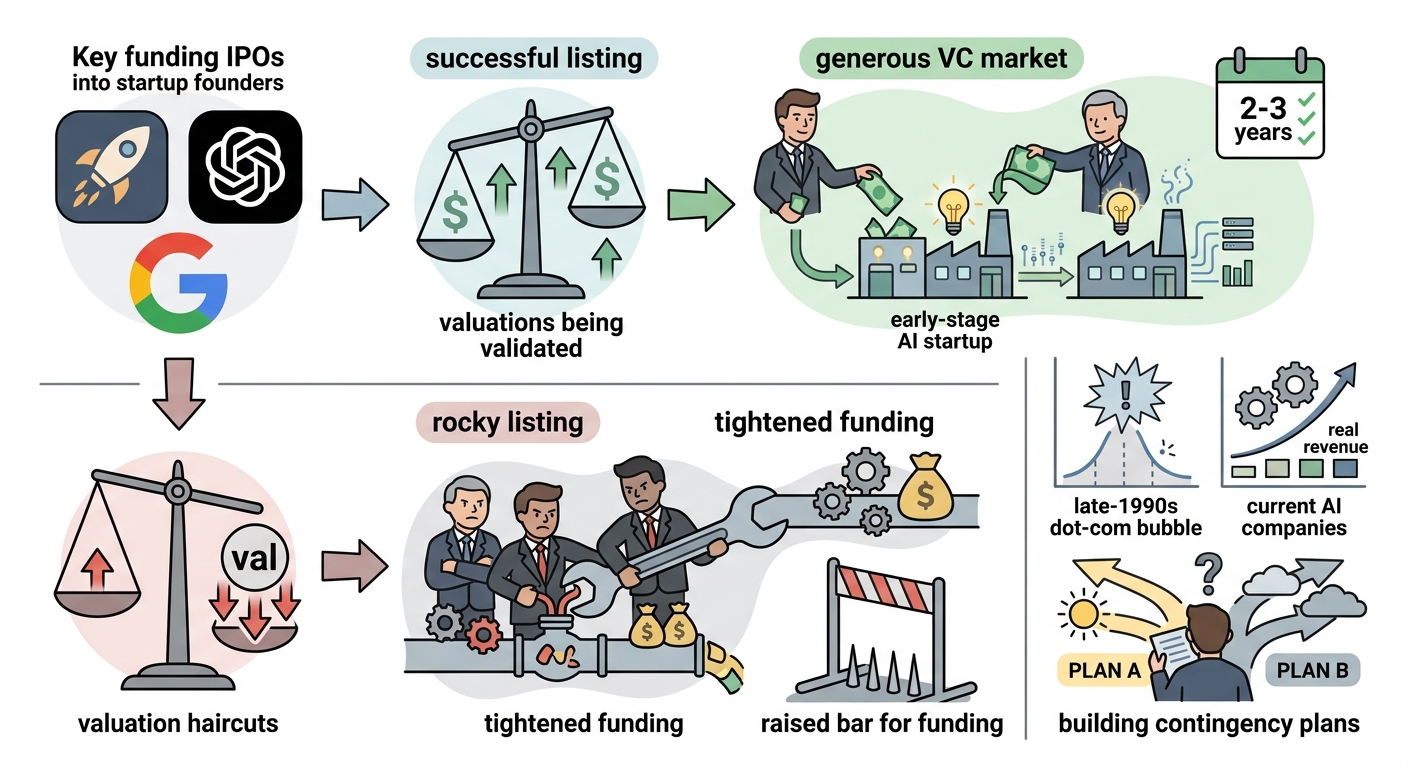
For founders building AI-enabled companies right now, the outcome of these three IPOs will define the funding environment for the next two to three years more than any other factor. A successful SpaceX and OpenAI listing at or near their target valuations validates AI company economics and keeps the VC market generous for early-stage AI startups.
A rocky listing that forces significant valuation haircuts signals a market correction that will tighten early-stage funding and raise the bar for what constitutes a fundable AI startup.
Analysts have drawn parallels with the late-1990s dot-com bubble, noting that a flurry of mega-cap IPOs could mark the top of the market. That parallel may be right or it may be wrong — the current AI companies have real revenue in ways that 1999 dot-com companies did not. But the pattern of extreme valuations meeting public market scepticism is worth building contingency plans for.
The Practical Advice
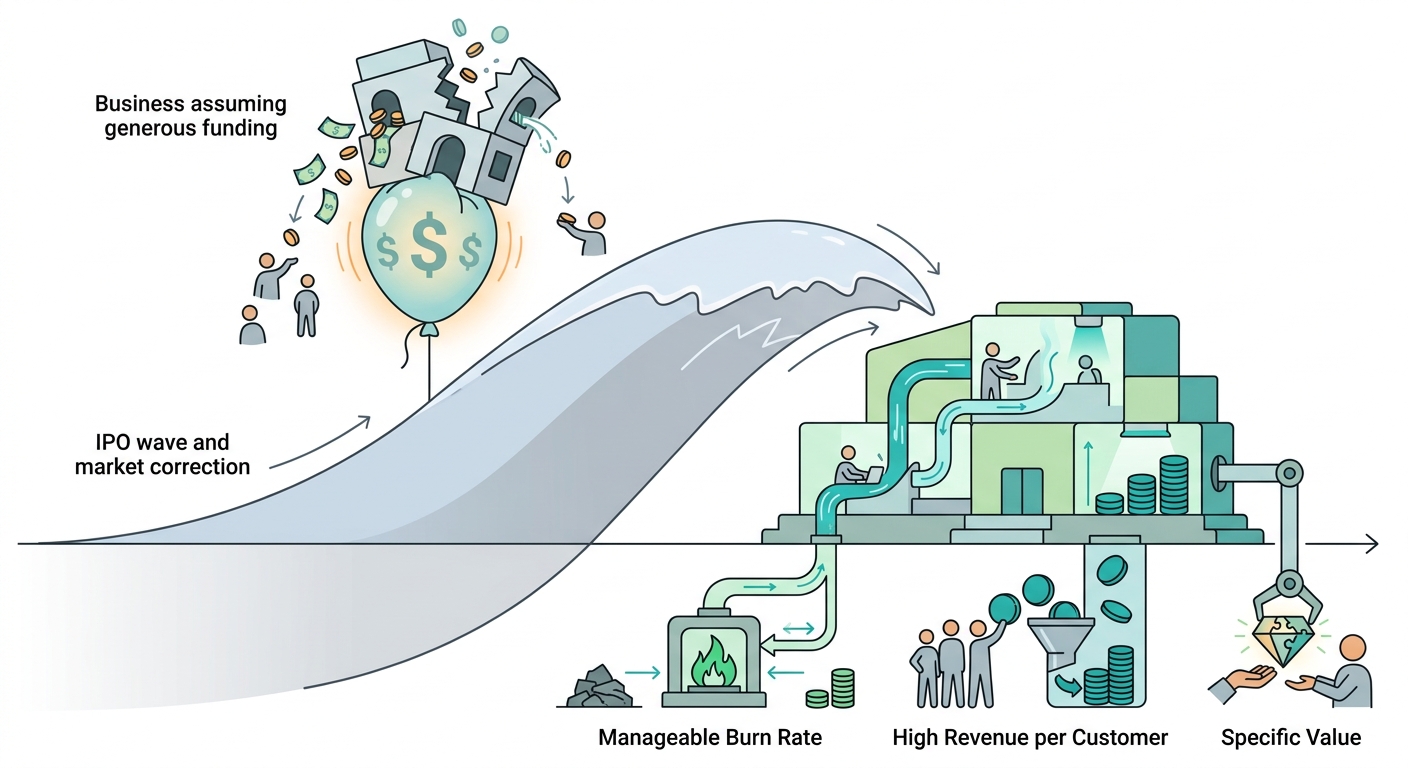
Whatever happens with the IPO wave, the businesses that survive market corrections are the ones that built for sustainable economics rather than assuming the funding environment stays generous forever.
Keep your burn rate manageable, keep your revenue per customer high, and build the kind of specific value that customers will continue paying for even when the AI hype cycle eventually moderates. The correction will come. The companies that built real things will come out the other side fine.
💬 Reddit — r/investing and r/startups on the AI IPO wave and bubble risk: 🔗https://www.reddit.com/r/investing/search/?q=SpaceX+OpenAI+Anthropic+IPO+bubble+2026
🐦 X/Twitter — investors debating AI IPO valuations and market timing: 🔗https://x.com/search?q=AI+IPO+wave+SpaceX+OpenAI+Anthropic+valuation+2026&f=live
💬 Quora — is the AI startup valuation bubble about to burst in 2026: 🔗https://www.quora.com/search?q=AI+startup+valuation+bubble+IPO+2026
Quick Links: