
The Speed of Traction Has Compressed Dramatically
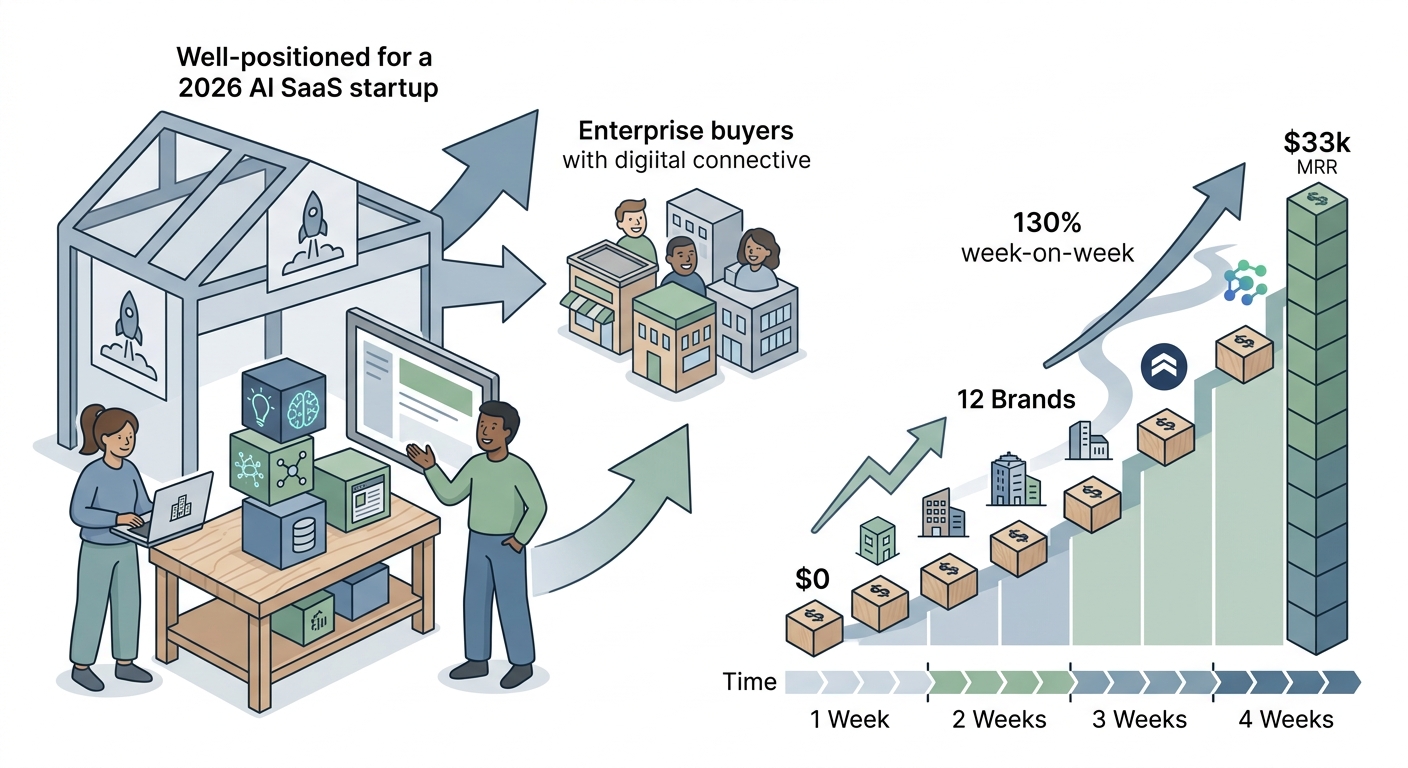
Something has changed about how fast well-positioned startups can build initial revenue. A recent Y Combinator batch company reported scaling from $0 to $33,000 in monthly recurring revenue in four weeks.
As of mid-March 2026, the company scaled from $0 to $33k in MRR in 4 weeks, is serving 12 brands, and is growing at 130% week-on-week. The company enables brands to rapidly deploy AI agents, build dashboards, and automate workflows across the entire business in a simple plug-and-play solution.
Four weeks to $33K MRR was exceptional in 2022. In 2026 it is becoming a benchmark that accelerator-backed AI SaaS startups are expected to approach.
The reasons are structural: AI tools have compressed the time to build a functional product, distribution channels have become more accessible to small teams, and enterprise buyers are significantly more willing to try new AI tools than they were before.
What Actually Drives This Speed
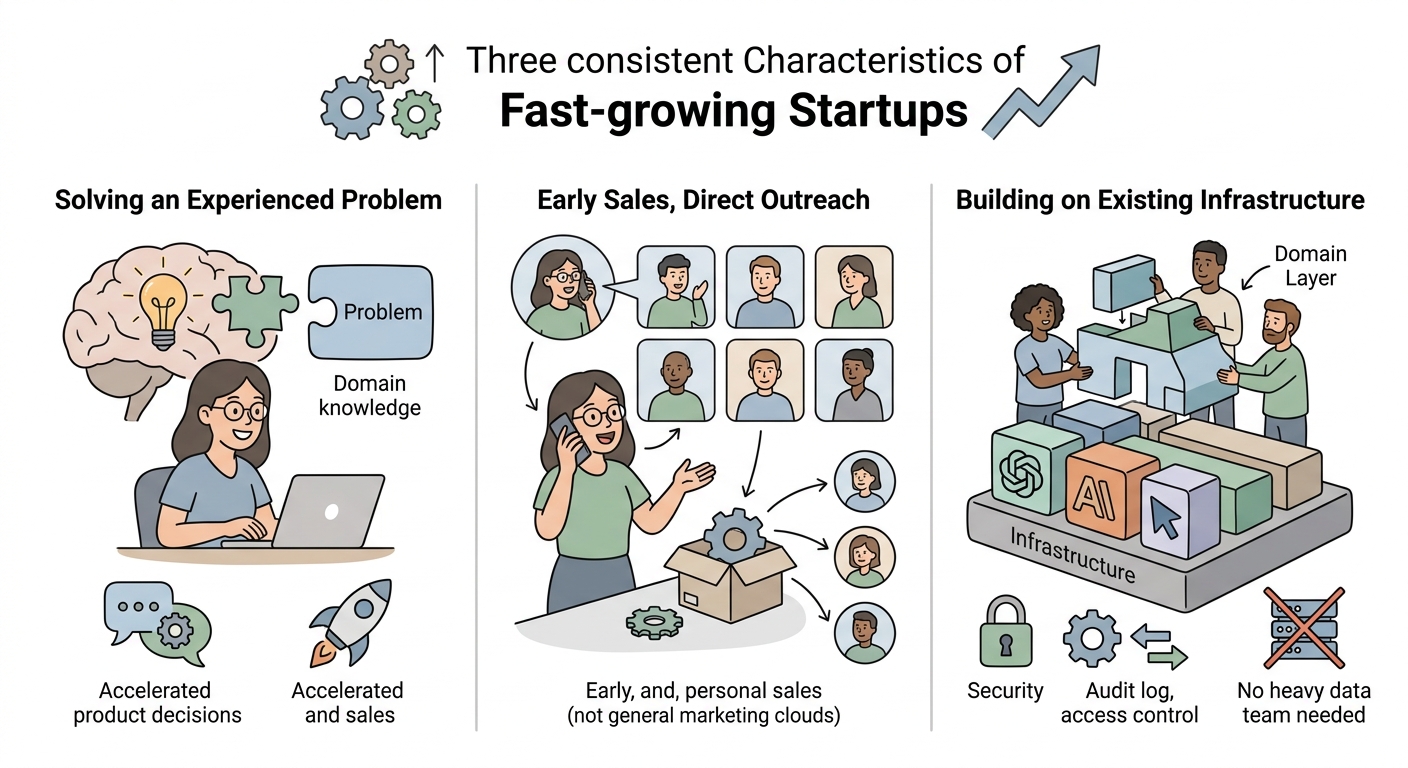
The startups hitting traction this fast consistently share three characteristics. First — they are solving a problem their founders experienced directly and understand deeply. The domain knowledge accelerates everything: sales conversations, product decisions, and positioning.
Second — they start selling before the product is perfect. The first 10 to 12 customers come from direct outreach to people the founders know in the target industry — not from marketing.
Third — they build on existing infrastructure rather than reinventing fundamentals. The company builds on tools like Claude and ChatGPT for AI agents and Cursor and Lovable for dashboards, deploying in a secure, audit-logged, access-controlled environment without needing a team of data engineers.
That last point is crucial. The startups winning in 2026 are not building AI from scratch. They are building on top of existing AI infrastructure and focusing their energy on the domain-specific layer where their expertise creates genuine differentiation.
The Lesson for Early-Stage Founders
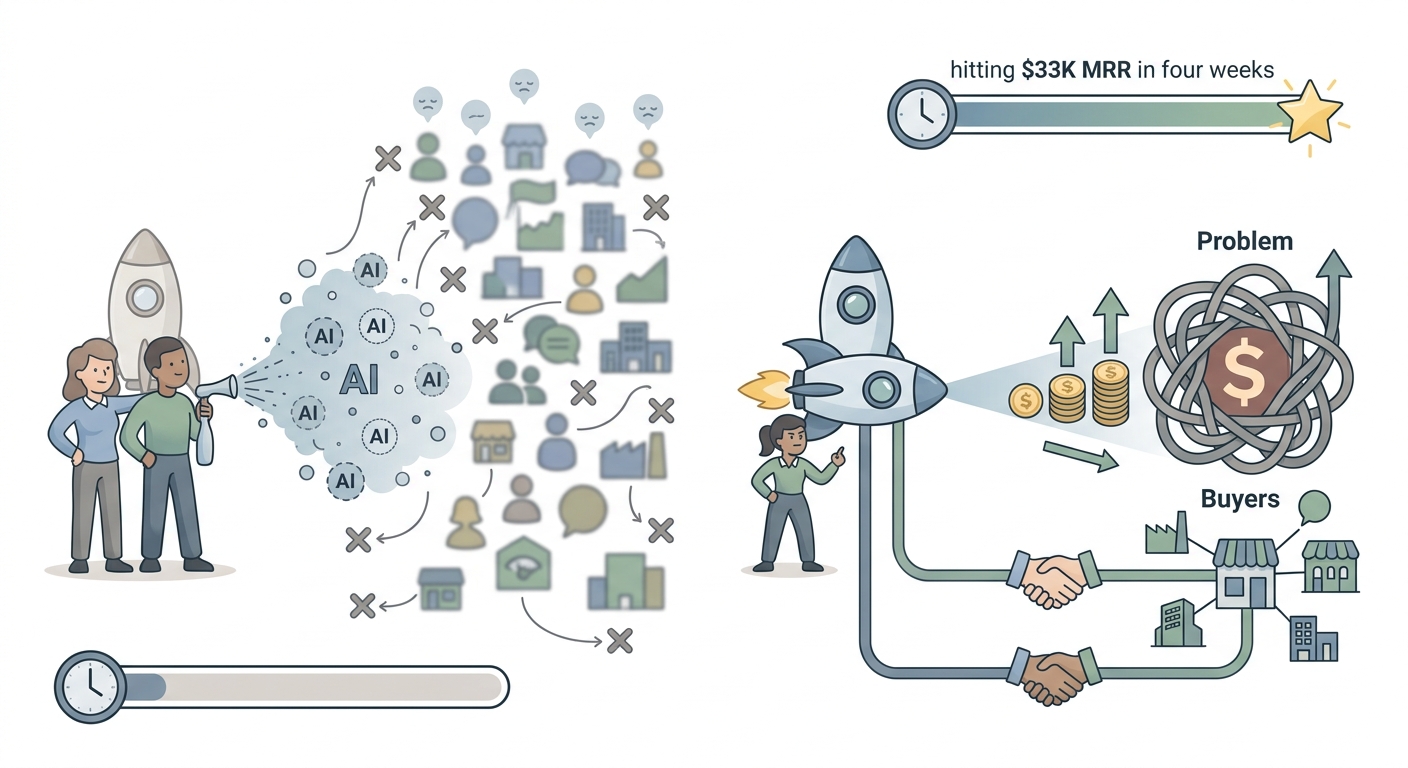
Speed of traction is now possible in ways it was not before. But it requires specificity. A startup trying to sell to “any business that needs AI” will not hit $33K MRR in four weeks. A startup solving one specific, painful, expensive problem for one specific type of buyer — and reaching those buyers directly through existing relationships — absolutely can.
💬 Reddit — r/startups on YC batch companies and early traction strategies: 🔗https://www.reddit.com/r/startups/search/?q=YC+startup+MRR+traction+2026
🐦 X/Twitter — founders sharing early traction stories and lessons: 🔗https://x.com/search?q=YC+startup+MRR+growth+2026+traction&f=live
💬 Quora — how do YC startups grow so fast in early stages: 🔗https://www.quora.com/search?q=YC+startup+grow+fast+early+stage+MRR+2026
Quick Links: