
Cheap residential IPs sometimes come from botnets like Kimwolf instead of consenting users, and a few checks can catch it before it costs you a banned account or a legal headache.
Botnet-sourced pools tend to be unusually cheap for their size, since the “supply” comes from hijacked devices instead of paid opt-in users
Legitimate providers publish clear consent and SDK disclosure policies; if a provider can’t explain how it sources IPs, treat that as a red flag
IP behavior patterns, like heavy concentration in a handful of countries with weak device security, mirror what researchers found in the Kimwolf network
Questions to ask a provider before buying
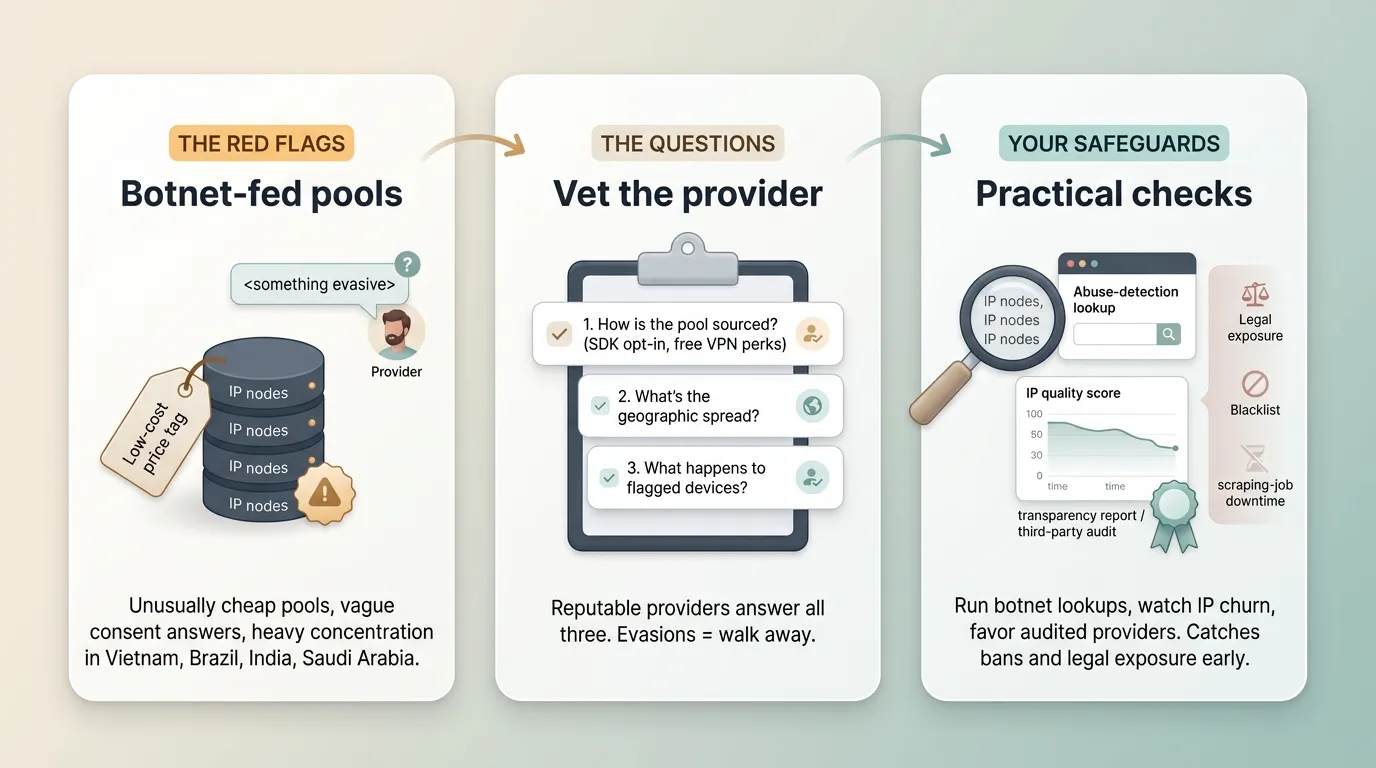
Ask directly how the residential pool is sourced. Reputable providers explain their consent mechanism, usually an SDK bundled into apps or games where users explicitly opt in for perks like free VPN access.
If the answer is vague, evasive, or the provider avoids the question, that is worth treating as a warning sign rather than a technicality.
Ask about geographic distribution. Botnet-fed pools cluster heavily where cheap, insecure Android TV boxes are common, which past research has tied to Vietnam, Brazil, India, and Saudi Arabia. A provider whose “global” pool is oddly concentrated in those markets deserves closer scrutiny.
Ask what happens to flagged devices. Providers that take abuse seriously have a process for removing compromised nodes. Providers that shrug off the question usually have not built one.
Practical checks on your end
Run a sample of IPs from any pool through an abuse or botnet-detection lookup before committing to a contract. Watch for unusually high churn in IP quality scores over time, since botnet nodes get flagged and dropped faster than genuine consenting-user IPs. And favor providers who publish transparency reports or third-party audits over ones who only market uptime and speed.
Why this matters beyond ethics
Using a botnet-sourced pool is not just a reputational risk. Traffic routed through hijacked devices can carry legal exposure, since the underlying device owner never consented to relaying your requests, and providers that get caught sourcing this way tend to get blacklisted by major sites fast, taking your scraping jobs down with them.
Quick Links: