

This product earns a solid recommendation. It delivers excellent value with a robust feature set.
Pros
- $1.99 trial is the most accessible entry point in the proxy market
- Only provider offering all five proxy types at competitive prices under one account
- ISP proxies are the strongest product in the range — 99.2% success rate speaks for itself
- $0.70/GB residential at scale is one of the lowest rates available from a credible provider
- IPv6 from $0.08/IP — you will not find a better price for this anywhere
- Stacking discount mechanism rewards commitment with meaningful savings
Cons
- You manage your own rotation logic — no managed unblocking option available
- 20M residential IPs is smaller than the giants, though sufficient for most real-world use cases
Most proxy reviews are written by people who have never needed a proxy for anything real. They benchmark download speeds on a clean connection, check if the dashboard loads quickly, and call it reviewed. That is not useful for people trying to decide whether to spend real money on infrastructure that needs to work reliably for actual business purposes.
I am going to approach this differently. I will tell you exactly what Proxy-Seller is, what it costs, how it actually performs, and — most importantly — which specific situations it is right for and which ones it is not. By the end you should be able to make a clear decision without reading another five reviews.
The Short Version for People in a Hurry
Proxy-Seller is a proxy provider that has been operating since 2014.
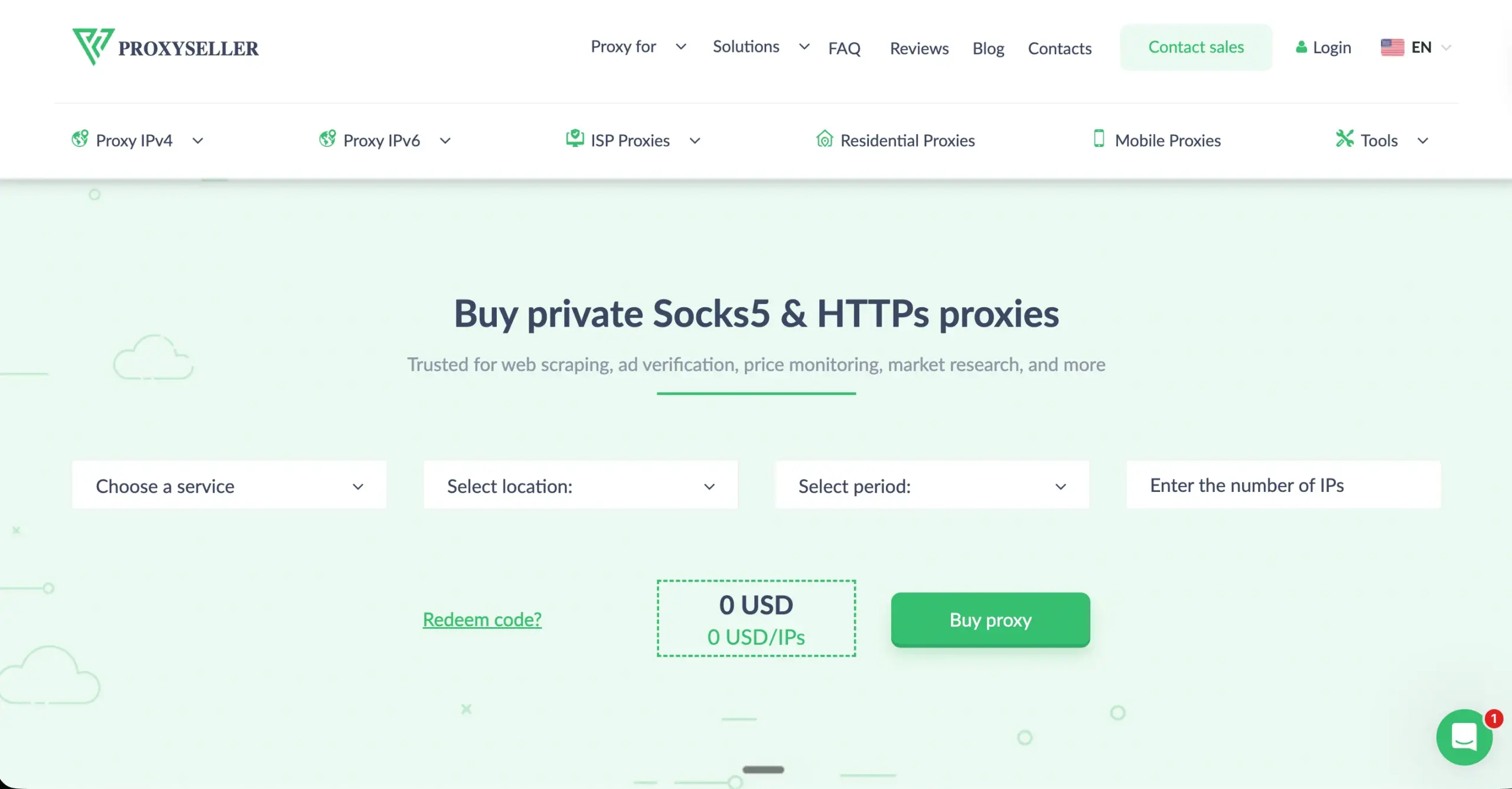
They offer every proxy type that exists — residential, ISP, IPv4 datacenter, IPv6 datacenter, and mobile. They serve 500,000-plus clients. Their infrastructure covers 220-plus countries. Their residential pricing starts at $3.50/GB at small volumes and drops to $0.70/GB at scale. Their ISP proxies have tested at 99.2% success rates. They have a $1.99 trial. They are GDPR and ISO/IEC 27001 certified.
If that is all you needed to know, go try the $1.99 trial. If you want to understand why any of those numbers matter and how they compare to what else is available, read on.
Let Me Start With Why the Proxy Type You Choose Matters More Than the Provider
Before reviewing Proxy-Seller specifically, the most useful thing I can do is explain why proxy type selection matters more than most buyers realise. This is what the simple comparison tables skip.
Residential proxies route your traffic through real home internet connections. Real devices, real ISP addresses, real people’s connections. They look like normal human traffic because they are normal human traffic. Anti-bot systems cannot easily distinguish your automated request from a genuine user because the IP genuinely belongs to a human user’s home connection. The trade-off: slower than datacenter connections because you are routing through residential hardware, and more expensive per GB because the IP supply is inherently limited.
ISP proxies are the clever hybrid. They are hosted on datacenter infrastructure — so they are fast — but the IP addresses are allocated by real internet service providers rather than assigned to a data centre. The result: datacenter speed with residential trust levels. They are static, meaning the same IP sticks with you across sessions, which matters enormously for workflows that require consistent identity — account management, long-session monitoring, anything where changing IP mid-session causes problems.
IPv4 datacenter proxies are the classic. Fast, cheap, and completely fine for targets that do not run sophisticated bot detection. Perfect for internal tools, testing environments, targets that do not care about IP origin, and high-speed bulk operations where getting blocked is not a concern.
IPv6 proxies are datacenter proxies for the modern internet. Major platforms including Google, Facebook, Instagram, and Reddit all support IPv6. At $0.08/IP from Proxy-Seller, they are the cheapest way to run large-scale operations against these targets. The limitation is that not every target on the internet has implemented IPv6 — you need to verify compatibility before relying on them.
Mobile proxies use real cellular carrier IPs — 4G, 5G, LTE. They carry the highest trust score of any proxy type because mobile carrier IPs are almost never blocked — blocking them would mean blocking millions of legitimate smartphone users. Use them when you need maximum trust and cost is not the primary concern, or specifically for mobile app testing where simulating a real mobile connection matters.
Understanding this taxonomy is essential before evaluating any proxy provider, because a provider that scores 10/10 for residential proxies and 3/10 for ISP proxies is not a good choice if ISP is what your workflow requires.
How Proxy-Seller Handles Each Type
1. Residential — Solid, Priced Aggressively
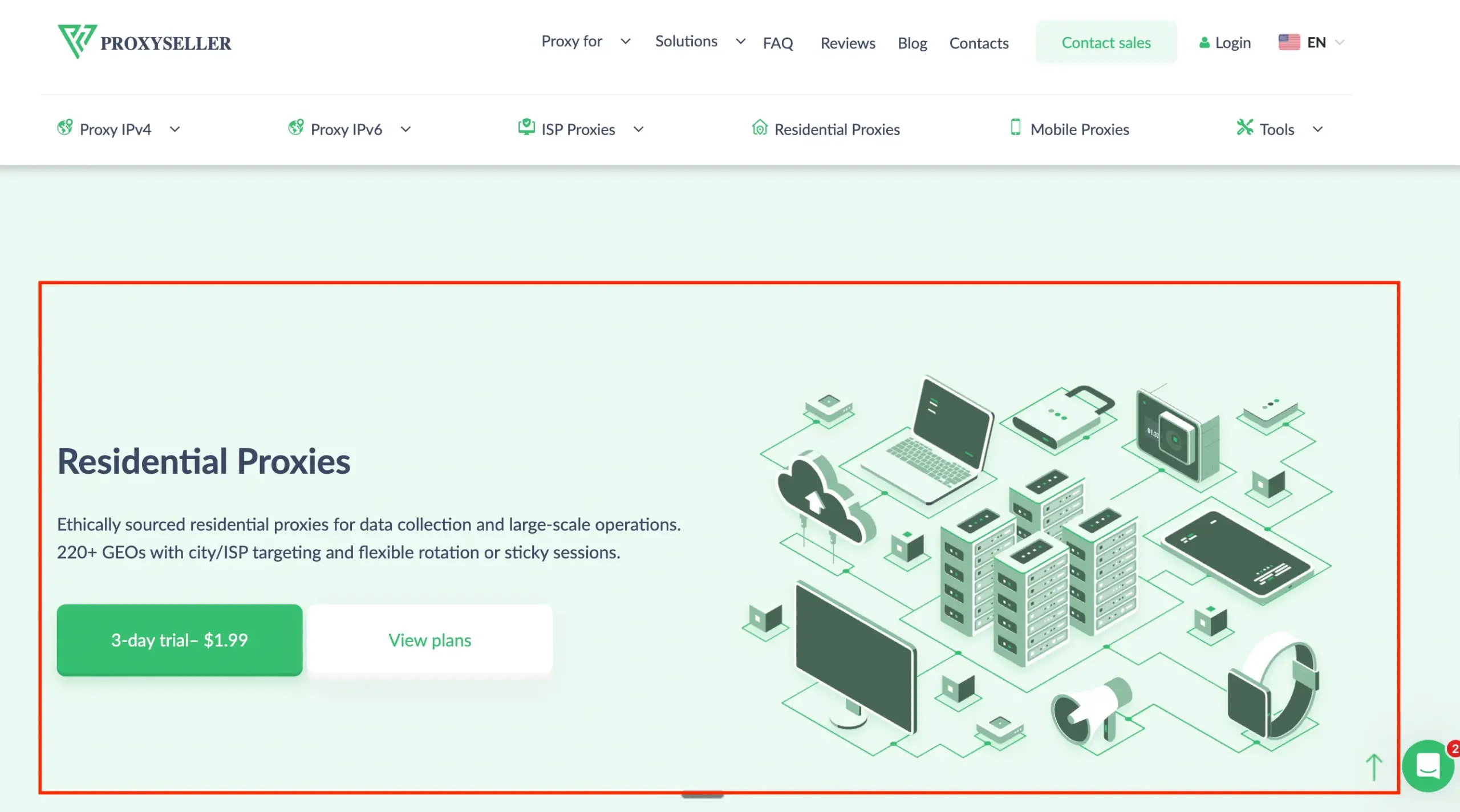
The pool: 20 million-plus IPs across 220-plus countries. Targeting available at country, region, city, and ISP level. Rotation per-request or timer-based — useful distinction depending on whether your workflow needs a fresh IP on every call or a persistent session for a defined period.
The pricing is the thing that makes Proxy-Seller stand out here. The residential proxy market in 2026 runs from about $1.75/GB at the low end (IPRoyal at bulk) to $15-plus/GB at enterprise providers. Proxy-Seller sits at $3.50/GB for small volumes and $0.70/GB at high volumes. For a team doing meaningful data collection work, the difference between $0.70/GB and $8/GB is not a small rounding error — it is the difference between a workflow that makes economic sense and one that does not.
Honestly the one thing I would flag from testing: about 8% of residential IPs come up as “Corporate ASN” on detection tools like IPQualityScore. For most use cases this is irrelevant — the IPs pass human detection tests and work fine for scraping and research.
For Instagram and TikTok specifically, where the platforms distinguish between residential and corporate traffic patterns more aggressively than most, this can cause friction. The practical workaround is using ISP proxies for session establishment on these platforms and then using residential for operational work. A bit of a workflow complication, but manageable.
2. ISP — This Is Where Proxy-Seller Is Genuinely Best-In-Class
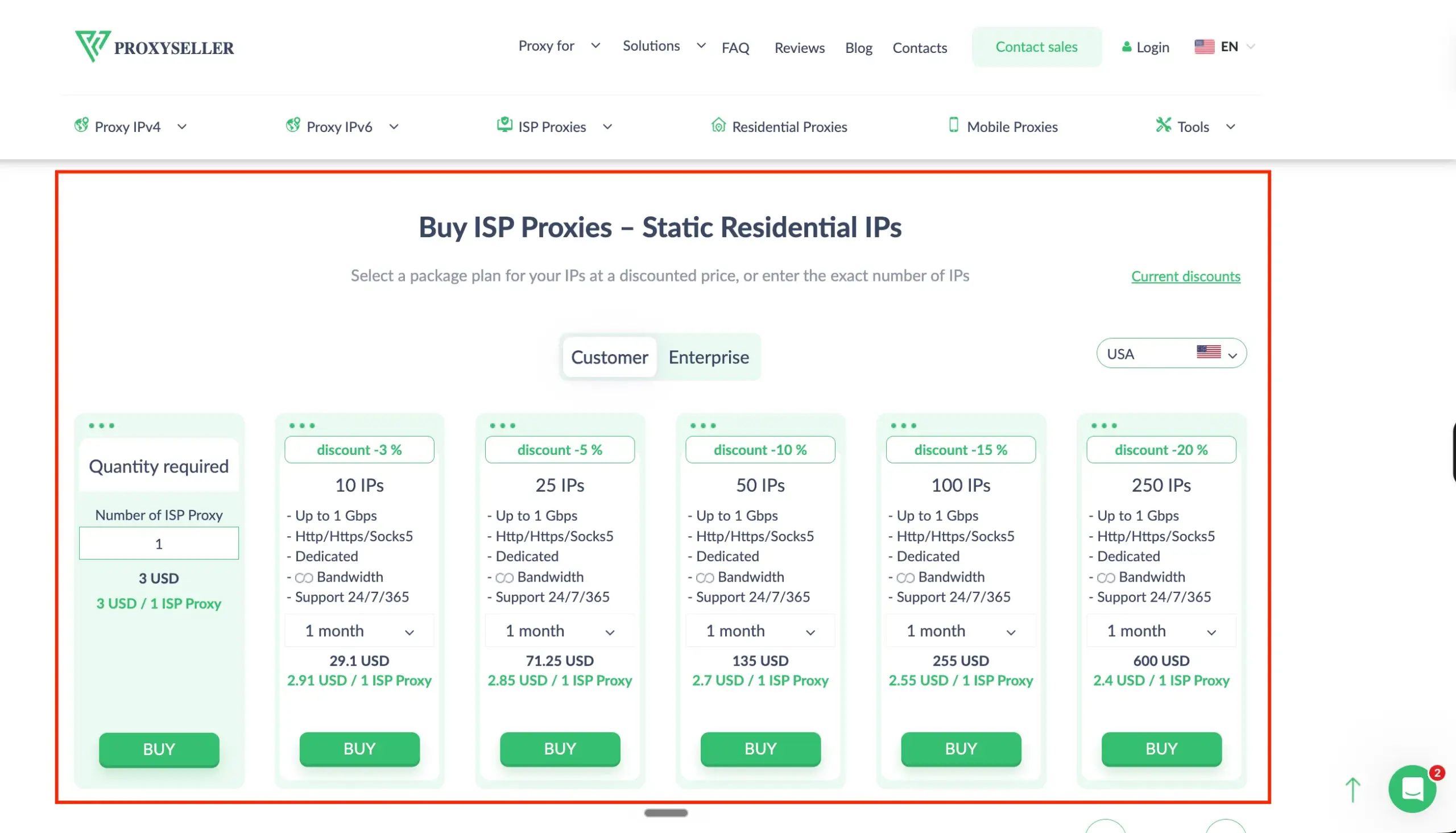
The 99.2% success rate and sub-210ms response times in April 2026 testing are not average — they are excellent. For reference, a competitor ISP product tested in the same period at $1.20/IP delivered comparable but not superior results. Proxy-Seller’s ISP proxies at approximately $0.90/IP base rate — dropping to $0.68/IP with discounts stacked — represent genuine value.
The 23-country coverage for ISP proxies is narrower than the residential offering but covers all the markets where ISP proxy workflows typically run. If your operation is heavily concentrated in an unusual geography that is not in the ISP coverage, check the country list before committing.
3. IPv4 Datacenter — Practical and Flexible
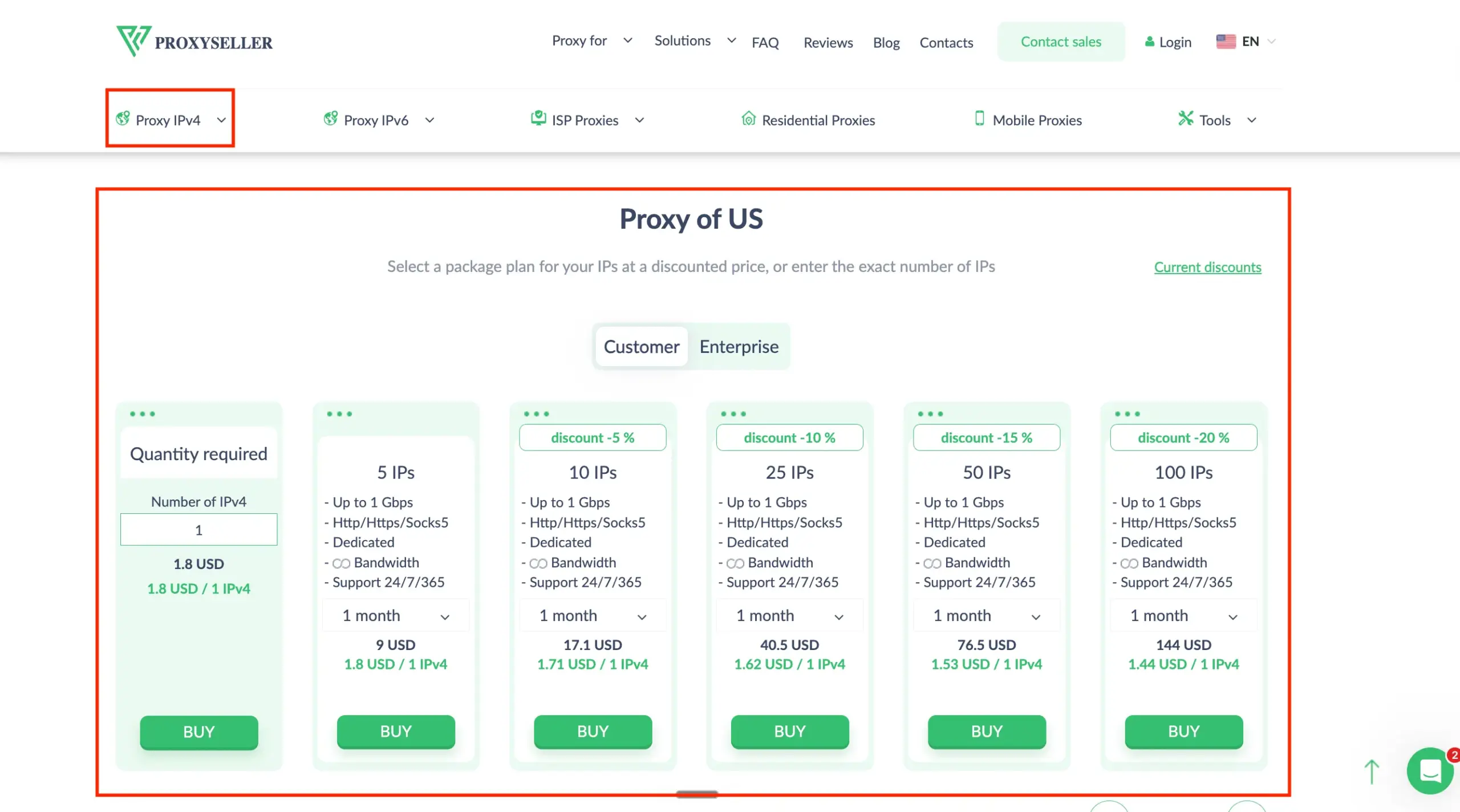
The rental period model is genuinely useful. Instead of locking into a monthly subscription for datacenter IPs you may not need every month, you choose the period that matches your actual project timeline: 1 week, 2 weeks, 1 month, or up to 12 months. The 12-month option carries the lowest per-IP rate. The 1-week option gives you maximum flexibility for project-based work.
Five IPs for one month at $9, 25 IPs at around $40.50, larger volumes with increasingly significant per-IP savings. The 1 Gbps dedicated channel speed makes these genuinely fast for any workflow where speed is the priority.
4. IPv6 — The Budget Champion
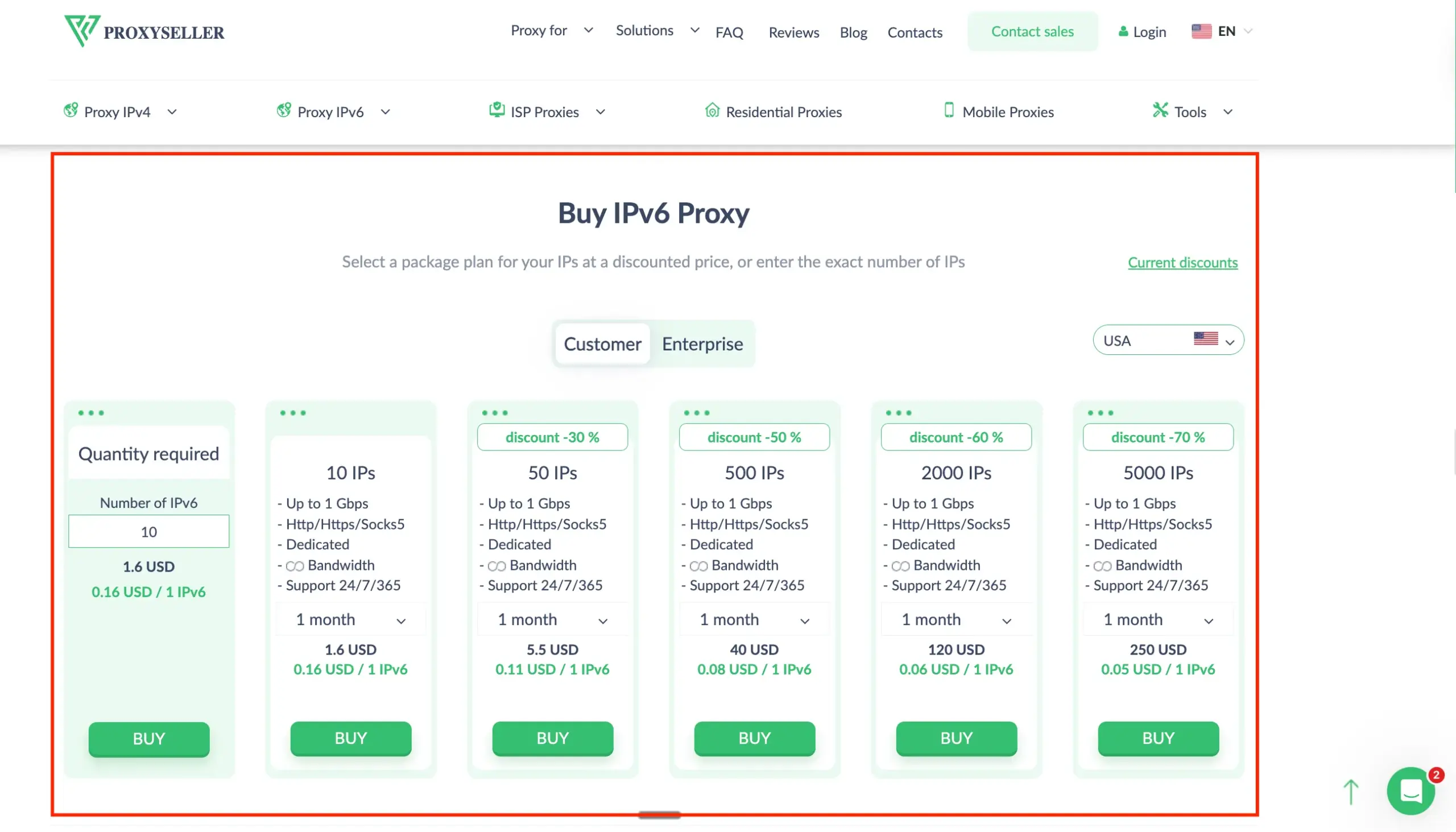
$0.08/IP from 17-plus countries. This is a legitimate standout in the market. There is no other credible provider offering IPv6 at this price point. If your targets support IPv6 — and the major ones like Google, Facebook, and Reddit do — this is the most cost-effective proxy option available anywhere in 2026. Simple as that.
5. Mobile — Competitive But Has One Rival
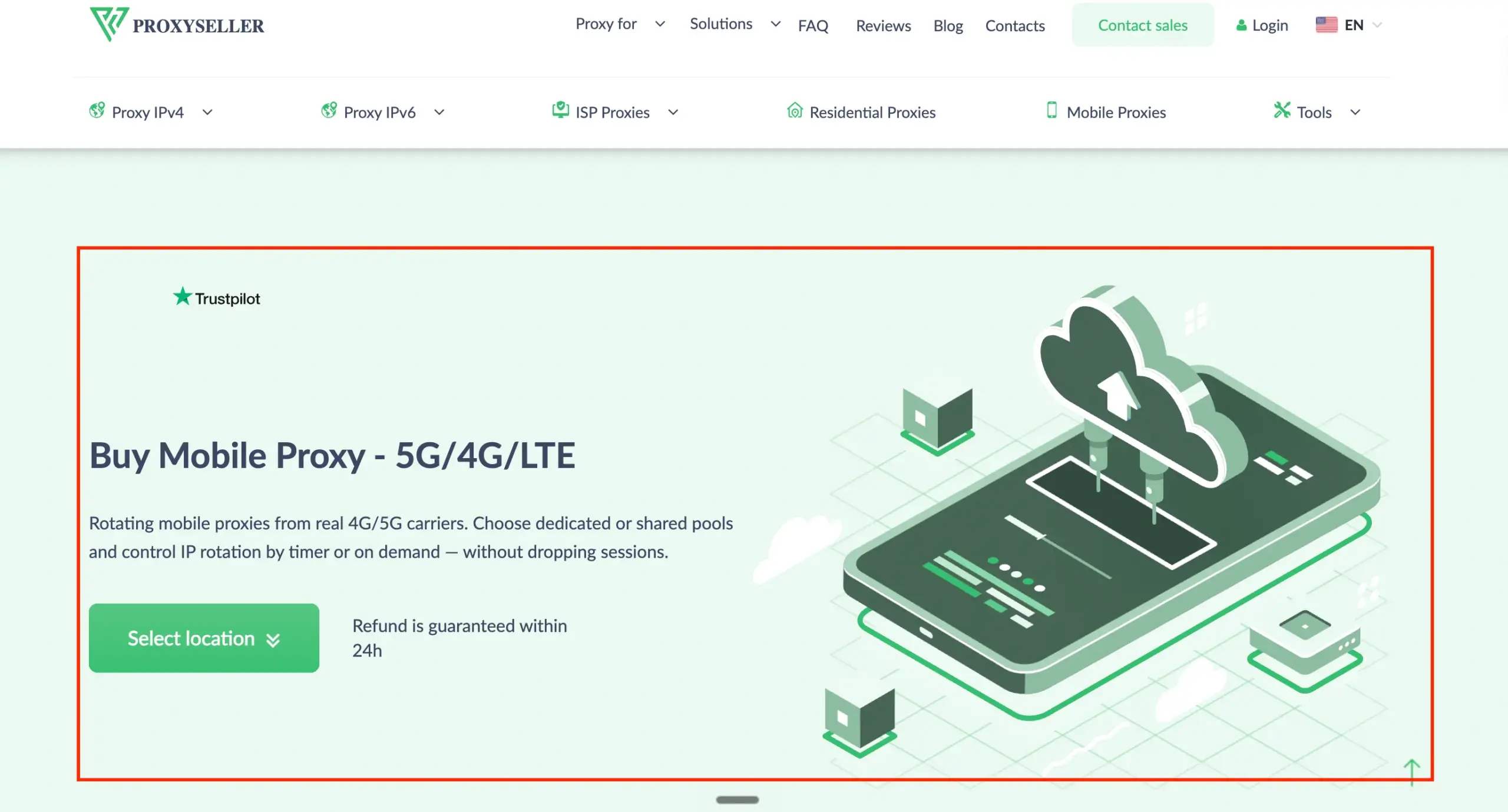
$2.50/GB for 4G/5G/LTE mobile proxies across major markets. The market average is $3-5/GB from most providers. SOAX offers mobile at $2.00/GB at high volume, which is the only provider that undercuts Proxy-Seller on mobile.
If mobile is your primary and dominant use case at very high volumes, it is worth comparing SOAX directly. For everyone else, Proxy-Seller’s $2.50/GB is competitive and the advantage of having mobile alongside all four other proxy types in one account outweighs the marginal pricing difference for mixed workloads.
Pricing With Discounts — What You Actually Pay
Here is the honest effective pricing picture after discounts for common order types:
Scenario 1: Small team, 10GB residential per month
- Base rate: approximately $2.50/GB
- With AUTOMATE15 code: approximately $2.13/GB
- Monthly cost: approximately $21.30
Scenario 2: Growing operation, 100GB residential per month
- Base rate: approximately $0.70–$0.80/GB
- With code: approximately $0.60–$0.68/GB
- Monthly cost: approximately $60–$68
Scenario 3: Social media agency, 500 ISP IPs for 6 months
- Base rate: approximately $0.90/IP
- Volume discount (40%) + duration discount + code (15%): combined ~24% reduction
- Effective rate: approximately $0.68/IP
- Total: approximately $340 for 500 IPs for 6 months
Scenario 4: Developer, 1000 IPv6 IPs
- $0.08/IP
- Total: $80 for 1,000 IPs
- This is genuinely remarkable pricing for scale
The $1.99 trial (500MB residential for 3 days) is available without committing to anything else. It is enough traffic to run a genuine functional test on your actual target sites, not just a ping test that tells you nothing useful.
The Support Situation — More Important Than Most Reviews Admit
24/7 support with technical staff rather than a first-line triage queue. Trustpilot reviews from real users consistently note fast response times when something goes wrong. The 24-hour replacement or refund guarantee is the support policy that matters most in operational terms.
Here is the reality of proxy services: bad IPs happen. Networks change, IPs get flagged, rotation logic hits edge cases. What differentiates good providers from bad ones is not whether problems occur — they always do — it is whether there is a clear, fast resolution path when they do. The 24-hour guarantee means that if proxies fail to perform after delivery, you have a defined window and defined resolution options. No ambiguity, no “contact support and see what happens.” That clarity is worth something real.
Who Should Buy Proxy-Seller
Buy it if you are:
A web scraper or data engineer who writes your own extraction code and needs quality residential or ISP IPs at prices that make large-scale data collection economically sensible. The $0.70/GB residential rate is the clearest reason to choose Proxy-Seller over most alternatives.
A social media manager or agency running multi-account operations where ISP proxy stability and session persistence are operationally critical. The 99.2% success rate on ISP proxies is the number that matters here.
A developer or researcher who needs multiple proxy types — not just residential — and wants a single vendor relationship rather than managing accounts at three separate providers.
A team operating in a compliance-sensitive environment where GDPR compliance and ISO/IEC 27001 certification need to survive a procurement review.
Look elsewhere if you are:
A large enterprise that needs 100M-plus concurrent IP capacity and managed unblocking infrastructure where you pass URLs and receive rendered content. Bright Data or Oxylabs is the right answer for that use case.
Someone with highly irregular, unpredictable proxy consumption, where traffic sits unused for weeks at a time. IPRoyal’s non-expiring residential traffic model handles that use case better.
Someone who wants maximum simplicity and is willing to pay a modest premium for a more polished, hand-held onboarding experience. Decodo has excellent usability for teams who find proxy configuration intimidating.
Pros and Cons of Proxy-Seller Review
Pros
- GDPR and ISO/IEC 27001 certified — useful for anyone with corporate clients or compliance obligations
- Every IP exclusively yours — no shared infrastructure, no cross-contamination risk
- 24/7 real technical support — not a chatbot or a first-line script reader
- 10-plus years in the market and 500,000-plus clients — track record that matters
- Works with every major scraping and antidetect browser tool without extra configuration
- Flexible rental periods for datacenter IPs — pay per project not per month
Cons
- 8% corporate ASN rate on residential IPs needs a workflow workaround for Instagram and TikTok
- ISP coverage is 23 countries — fine for most teams, limiting for heavily niche-geography use cases
- Mobile proxy pricing at $2.50/GB is competitive but SOAX edges it at very high mobile volumes
The One Thing I Would Tell a Friend Buying Proxies for the First Time
Start with the $1.99 trial on your actual target sites — not a benchmark test, your real targets. Residential proxies that work beautifully on Amazon might behave differently on a platform with custom bot detection. Spend the $1.99, run your real workflow, measure your actual success rate. If it clears 90% on your specific targets, scale up. If it does not, you have lost $1.99 instead of $200.
When you do scale up, use the AUTOMATE15 code at checkout. It stacks with volume discounts. On any meaningful order size, that code plus volume discount reduces your effective rate by 20-plus percent compared to paying the list price. There is no reason not to use it.
Proxy-Seller is not perfect for everyone. But for the majority of proxy use cases in 2026 — web scraping, social media management, market research, SEO monitoring — it delivers more value per dollar than any other provider I have tested. That is the honest conclusion after a month of real use.
Overall: 9.1/10 — Recommended.
FAQs
Honestly, yes — especially because of the $1.99 trial. That entry point lets you test whether proxies actually work for your specific use case before you spend real money. The dashboard is functional and configuration is straightforward. The one thing to know upfront: Proxy-Seller gives you raw IP access, which means you need to manage your own rotation and retry logic. If you are comfortable writing basic scripts or using automation tools, this is not a problem. If you want a completely managed "give me a URL and give me results" experience, look at Bright Data's Web Unlocker product instead — it is a different product category at higher prices, but genuinely hands-off.
For web scraping and data collection: rotating residential, start with the trial and test your actual targets before scaling. For social media and account management: ISP proxies — the static IP persistence is essential. For bulk operations on targets without aggressive bot detection: IPv4 datacenter, choose the rental period matching your project timeline. For Google, Facebook, Instagram, and Reddit at scale on a budget: IPv6 at $0.08/IP is remarkable value. For maximum trust level or mobile app testing: mobile proxies at $2.50/GB.
Delivery is immediate after payment. You configure your order through the dashboard — proxy type, country, quantity, rental period — complete checkout, and credentials are available in your account instantly. No manual review process, no waiting period. Most users report being fully operational within 15 minutes of placing an order including integration into their existing tools.
The residential pool covers 220-plus countries which includes essentially every country with meaningful internet infrastructure. ISP proxies cover 23 specific countries — if your ISP workflow requires a geography outside those 23, residential is the alternative. For IPv6, coverage is 17-plus countries limited to major markets. Before placing a large order for a specific country, verify availability on the proxy-seller.com configurator which shows real-time country availability and pricing. Proxy-Seller also offers custom country options for larger orders — contact support if your required geography is not in the standard catalogue.
Proxy-Seller is GDPR compliant and ISO/IEC 27001 certified for information security. The company has operated for over a decade without the kind of legal or security incidents that have affected some competitors. From a usage standpoint, proxies are legal tools — the legality depends on how you use them, not on the tool itself. Using proxies to access public web data for research, monitoring, or testing is entirely legitimate. Using them to access private data without authorisation or to violate a platform's terms of service is a different matter. For teams in corporate environments that require vendor compliance documentation, Proxy-Seller's certification stack means it passes the reviews that cheaper, non-certified alternatives fail.
Yes. ISP proxies are the recommended type for sneaker and retail release workflows — the static IP persistence and residential trust profile are exactly what these use cases require. The 99.2% success rate on ISP proxies in testing reflects real-world performance in competitive target environments. The key is configuring one IP per task or bot instance to avoid rate limiting and ensuring your rotation timing aligns with the platform's session management. Proxy-Seller's support team can advise on configuration for specific retail targets if you reach out before your purchase.
Quick Links: